Let Our Packaging Experts Review Your Project
Share your packaging requirements before you leave. Our experts can review your dieline, artwork, materials, inserts, finishing, certifications, MOQ, quality checks, and delivery expectations.

Choosing a paper bag material is not simply a choice between brown kraft and glossy white paper. The substrate affects carrying strength, print reproduction, fold performance, surface feel, finishing options, recyclability, and ultimately the total cost of the bag.
For a professional buyer, the more useful question is: Which paper delivers the required performance for the product, bag structure, printing process, and distribution conditions?
A lightweight apparel bag and a carrier for boxed cosmetics can use very different specifications even when their dimensions look similar. Likewise, increasing GSM does not automatically solve handle tear-out, bottom failure, or poor crease performance. Material, structure, reinforcement, adhesive, handles, and actual product load need to be considered as one packaging system.
Paper bag terminology can become confusing because supplier catalogs often mix true paper grades with surface treatments and decorative variants.
Brown kraft, white kraft, coated art paper, SBS paperboard, and recycled paper are substrate categories. Lamination is a conversion process. Embossing is a surface treatment. Pearlescent, metallic, or dyed-through papers are normally specialty variants rather than completely separate structural material families.
This distinction matters during an RFQ. A quotation for “200 GSM premium paper” tells you very little unless the supplier also defines the paper grade, recycled content if relevant, coating, surface treatment, and bag construction.
GSM itself is grammage—the mass of paper per unit area. ISO 536:2019 specifies the method for determining paper and board grammage. It does not define carrying strength. Two papers with the same grammage can therefore behave differently because of fiber composition, tensile properties, moisture sensitivity, coating, and converting quality.
| Paper bag material | Main advantage | Common applications | Main consideration |
|---|---|---|---|
| Natural kraft paper | Strength, natural appearance, efficient converting | Retail, apparel, food takeaway, promotions | Brown surface changes printed color appearance |
| White kraft paper | Kraft-like performance with cleaner printing surface | Fashion, cosmetics, branded retail | Usually costs more than basic brown kraft |
| Recycled kraft/recycled paper | Supports recycled-content specifications | Retail, events, general merchandise | Surface shade and fiber characteristics may vary |
| Wet-strength kraft | Better performance under damp conditions | Food, flowers, outdoor or humid applications | Treatment must suit recycling and compliance goals |
| Coated art paper | Excellent graphics and smooth finish | Beauty, fashion, promotional and luxury bags | Coating and lamination affect fold behavior and recycling |
| SBS/ivory board | Stiffness and premium white presentation | Jewelry, perfume, cosmetics, gifts | Excessive stiffness may be unnecessary for lightweight products |
| Duplex/CCNB board | Economical stiffness with printable face | Promotional and value-oriented structured bags | Backside appearance may be less premium |
| Uncoated woodfree/offset paper | Smooth, understated print surface | Promotional, publishing and lightweight retail uses | Usually not selected for demanding load-bearing applications |
| Textured specialty paper | Tactile differentiation | Luxury retail, jewelry, fashion and gifting | Texture can change ink and foil results |
| Dyed-through/colored paper | Rich color without heavy ink coverage | Fashion, beauty and premium gifting | Color consistency should be approved against production stock |
| Grease-resistant paper | Resistance to oils and food contact contamination | Bakery, confectionery and takeaway bags | Barrier requirement must match the actual food application |
| Barrier-coated/laminated paper | Improved moisture, scuff or surface protection | Premium retail and demanding environments | Mixed-material structures can complicate recyclability |
The practical point is that there is no universally superior paper. Each material trades strength, appearance, converting performance, sustainability, and cost differently.
Natural kraft is one of the most practical materials for shopping bags because it combines usable mechanical performance with efficient converting and a recognizable brown fiber appearance.
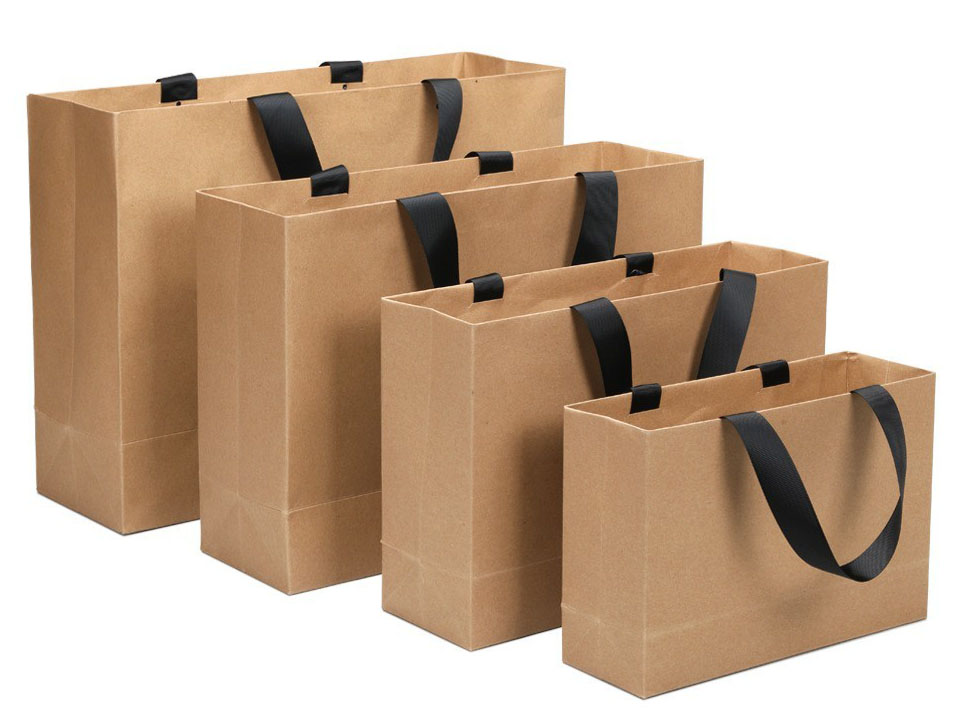
It works particularly well for simple logos, typography, earthy brand systems, boutiques, event merchandise, coffee, bakery products, apparel, and general retail goods. A natural kraft shopping gift bag also demonstrates that kraft does not have to look industrial; ribbon handles and restrained printing can move it into gift and boutique applications.
The limitation is the paper color. Light inks, pastel artwork, photography, and tightly controlled corporate colors behave differently on brown stock than they do on a bright white surface. Buyers should approve printing on the actual production paper rather than relying entirely on a digital mock-up.
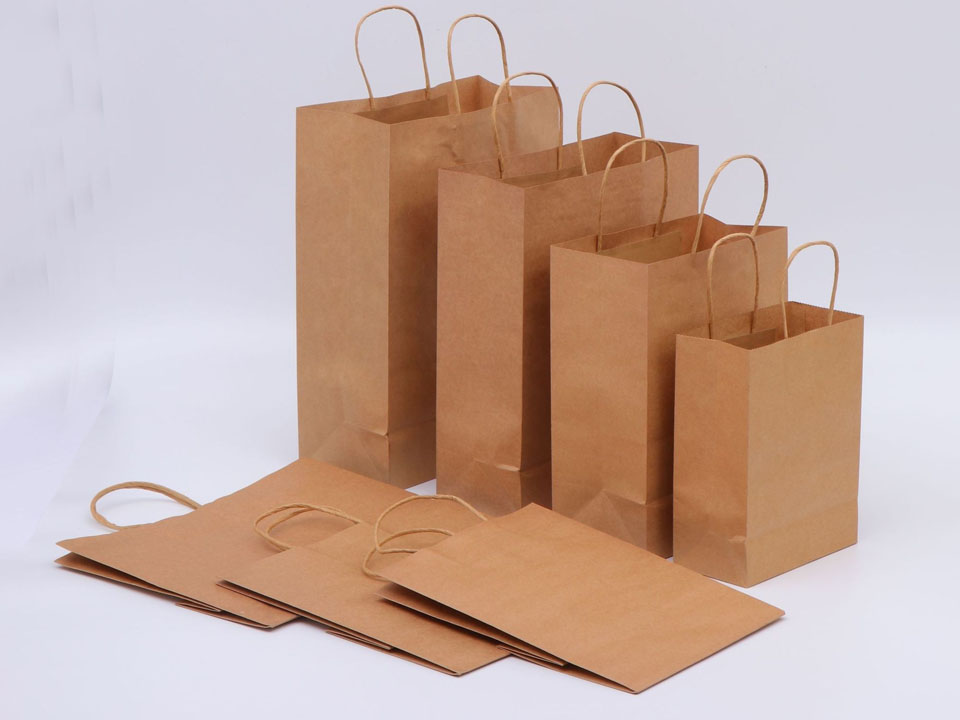
White kraft is useful when a project needs a cleaner print background without abandoning the visual and structural characteristics associated with kraft bags.
It suits apparel, cosmetics, skincare, specialty food, events, and general branded retail. Compared with brown kraft, the white surface provides greater contrast for colored graphics and black typography.
A printed retail paper shopping bag illustrates the type of full-surface branding that buyers may evaluate when deciding between white kraft and coated art paper.
Ask the supplier whether the quoted material is bleached kraft, coated kraft, or another white paper marketed generically as “white kraft.” Those are not necessarily interchangeable specifications.
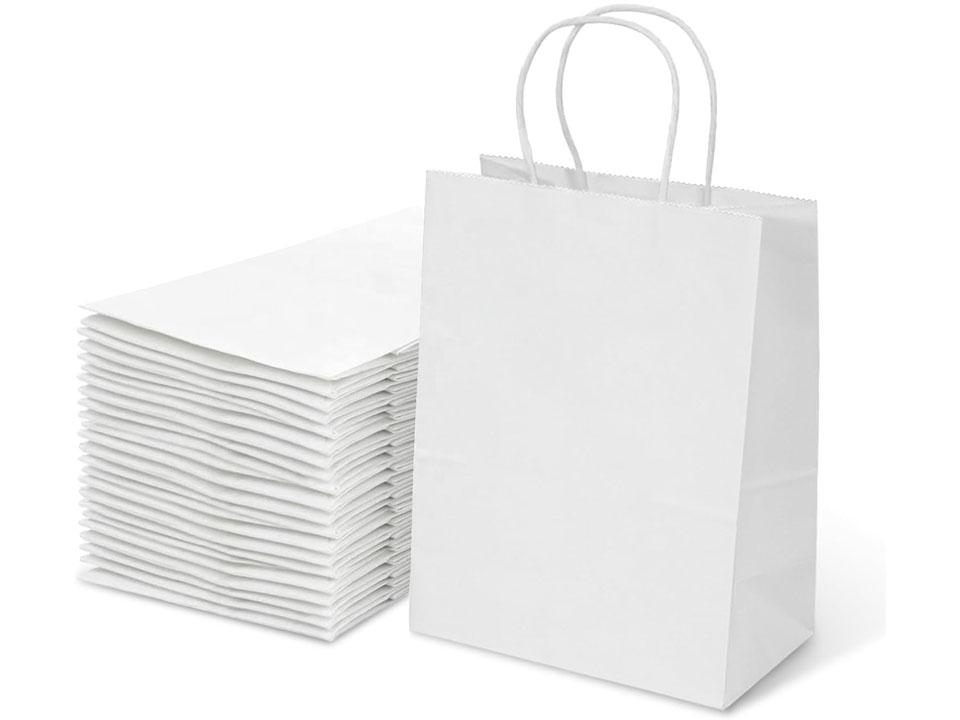
Recycled paper can be appropriate when recycled content is part of a retailer’s packaging policy or sustainability specification.
The sourcing mistake is assuming that the word recycled defines the complete performance specification. It does not.
Specify the required recycled content, color expectations, paper grade, grammage, print standard, load requirement, and permitted surface variation. If appearance is critical, approve production-equivalent samples because recycled stocks can show more visible fiber and shade variation than highly controlled virgin-fiber white papers.
Recycled content should therefore be treated as one specification variable, not as a substitute for engineering the bag.
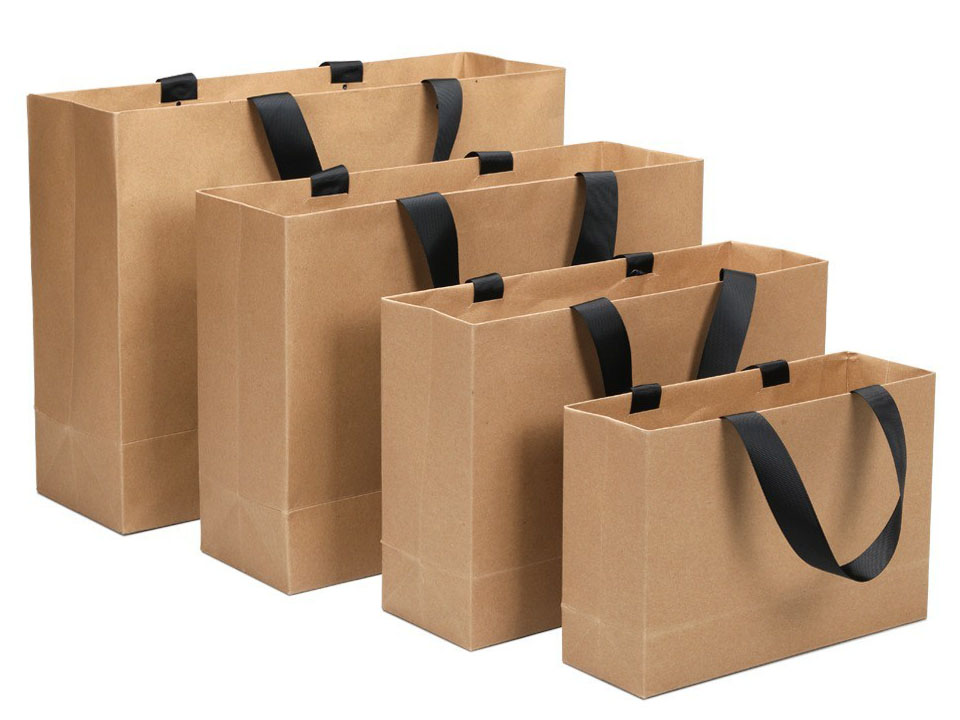
Standard paper loses performance when exposed to significant moisture. Wet-strength grades are treated to improve integrity in damp conditions.
This can be valuable for flower shops, chilled products, fresh-food environments, wet-weather retail, or other situations where condensation or occasional moisture exposure is predictable.
Do not automatically specify wet-strength treatment “for extra quality.” It adds another functional treatment to the paper system. Buyers should establish whether moisture resistance is genuinely required and confirm how the selected treatment affects printing, converting, recycling objectives, and any applicable food-contact requirement.
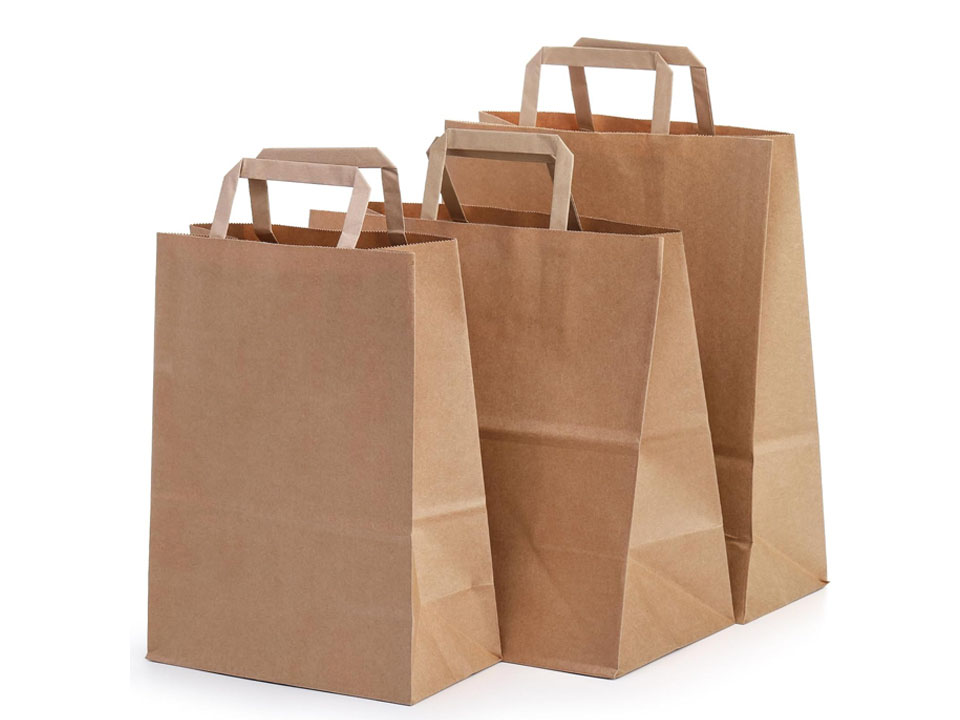
Coated art paper gives printers a smoother, more uniform surface than ordinary uncoated kraft. That makes it attractive for detailed graphics, dense solid colors, photography, fine typography, foil stamping, and premium retail branding.
This category is common in cosmetics, apparel, jewelry, fragrance, events, and luxury merchandise. A gloss-laminated apparel paper bag shows the type of polished visual presentation achievable with a coated paperboard construction.
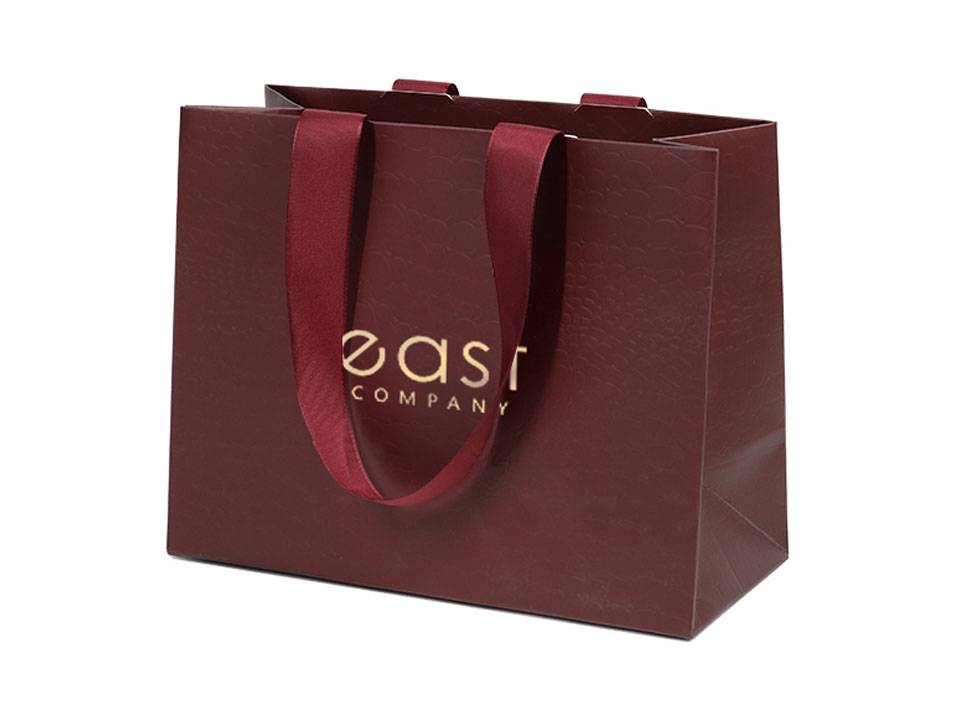
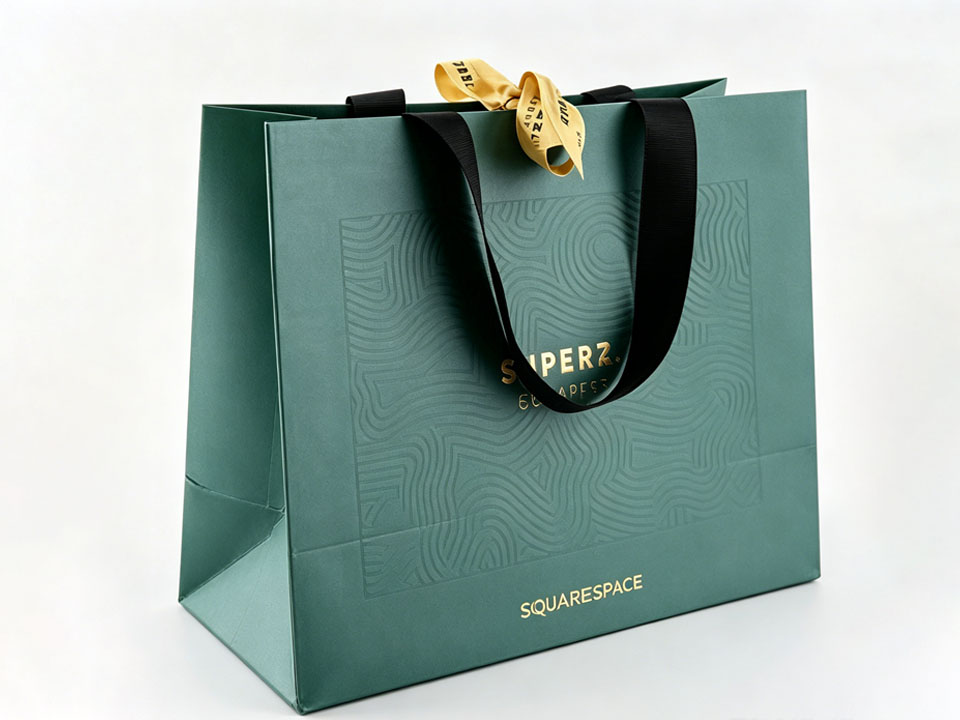
For more restrained luxury branding, a foil-stamped retail paper bag combines a dark surface, metallic detailing, and ribbon handles.
The trade-off is complexity. Once coatings, lamination, metallic decoration, heavy ink coverage, and specialty finishes are combined, cost increases and end-of-life recyclability may become less straightforward.
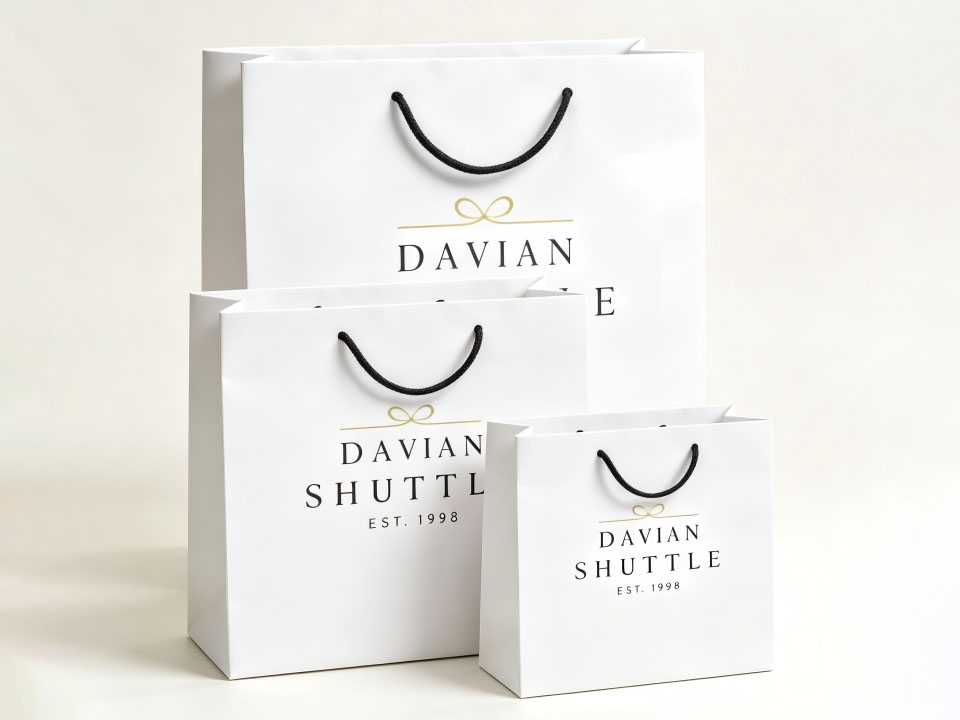
Solid bleached sulfate board—often called SBS, ivory board, or white card in commercial packaging discussions—is selected when stiffness, a clean white appearance, and high-quality printing matter.
It is suitable for structured premium shopping bags carrying cosmetics, jewelry boxes, perfume packs, electronics accessories, confectionery, and gift products.
Do not choose it solely because a heavier board feels more luxurious in a sample room. If the product is lightweight, excess board weight may increase material consumption and freight without improving real-world bag performance.
For many projects, a slightly lighter substrate with properly engineered top reinforcement and bottom construction performs better commercially than simply specifying the thickest paperboard available.
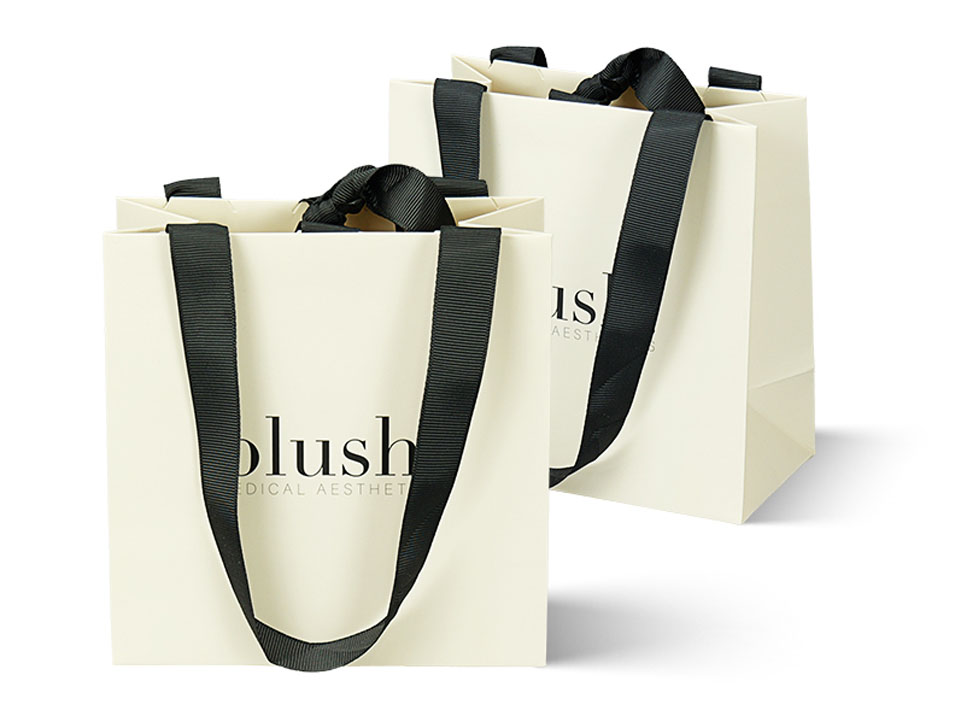
Duplex and coated recycled boards can provide a smooth printable face with an economical board construction.
They are useful for promotional campaigns, general retail, exhibition materials, and projects where bag stiffness matters but a luxury white interior is not required.
The key purchasing issue is appearance. Ask what the reverse side looks like, because some duplex constructions have a grey or less refined back. If the bag interior will be highly visible, a cheaper board may create an unintended mismatch with a premium exterior.
Uncoated smooth papers are useful where buyers want a cleaner feel than raw kraft but do not need the surface gloss of coated art stock.
Applications include promotional bags, book or stationery retail, lightweight merchandise, conferences, corporate events, and minimalist packaging programs.
They print well for many graphic styles but should not automatically be treated as a direct structural substitute for kraft. The supplier should confirm whether the selected grade is suitable for the expected bag dimensions, handle type, and carrying load.

Textured paper is primarily selected for tactile and visual differentiation.
Linen, leather-like, ribbed, embossed, felt-marked, and other decorative surfaces can make an otherwise simple bag feel distinctive without requiring full-surface graphics.
A textured boutique paper gift bag is a relevant example of using tactile stock, contrasting ribbon handles, and metallic decoration for premium presentation.
Texture, however, changes the printing surface. Fine screen printing, foil transfer, embossing, adhesive bonding, and small typography should be tested on the actual stock. A beautiful swatch is not enough; approve a converted bag sample.
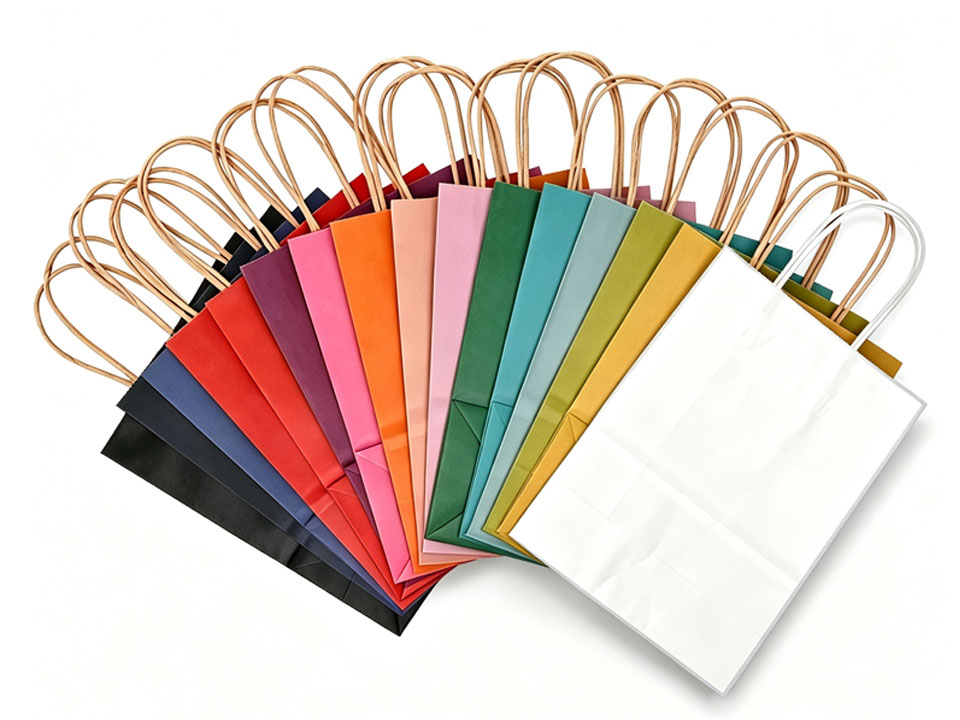
Dyed-through paper carries color through the paper body rather than depending entirely on a printed surface.
This makes it useful for luxury fashion, jewelry, cosmetics, gifting, and brand programs centered on strong solid colors. Edge appearance is often more visually integrated than on white paper that receives a dark surface print.
The procurement issue is color control. Specify the approved stock reference or acceptable color range rather than describing the material simply as “navy paper” or “burgundy paper.”
Also check availability before finalizing the artwork. Specialty colors may create higher MOQs or sourcing constraints compared with standard white and kraft grades.
Grease-resistant papers are designed for applications where oil migration would stain or weaken ordinary paper.
They are most relevant for bakery, confectionery, quick-service food, snacks, and other food-related bags rather than conventional apparel shopping bags.
The required grease resistance depends on the product. A dry bread bag, a pastry bag, and packaging exposed to hot fatty foods do not need identical barrier performance.
Food-contact buyers should therefore define the product, temperature, contact conditions, destination market, printing, and required documentation instead of ordering a generic “food-grade paper bag.”
Barrier-coated and laminated papers are technically converted material systems rather than a single base paper grade, but buyers encounter them frequently enough in paper bag quotations that they deserve their own category.
The additional layer can provide moisture resistance, scuff resistance, a gloss or matte appearance, improved cleanability, or a distinctive tactile finish.
For premium applications, a gold-foil paper shopping bag shows how surface finishing and metallic decoration can turn the base substrate into a substantially different finished packaging system.
The trade-off is end-of-life performance. The American Forest & Paper Association’s Design Guidance for Recyclability specifically addresses how non-fiber components such as coatings and additives can affect paper-based packaging recyclability. That means “made from paper” should not automatically be interpreted as “equally recyclable in every construction.”
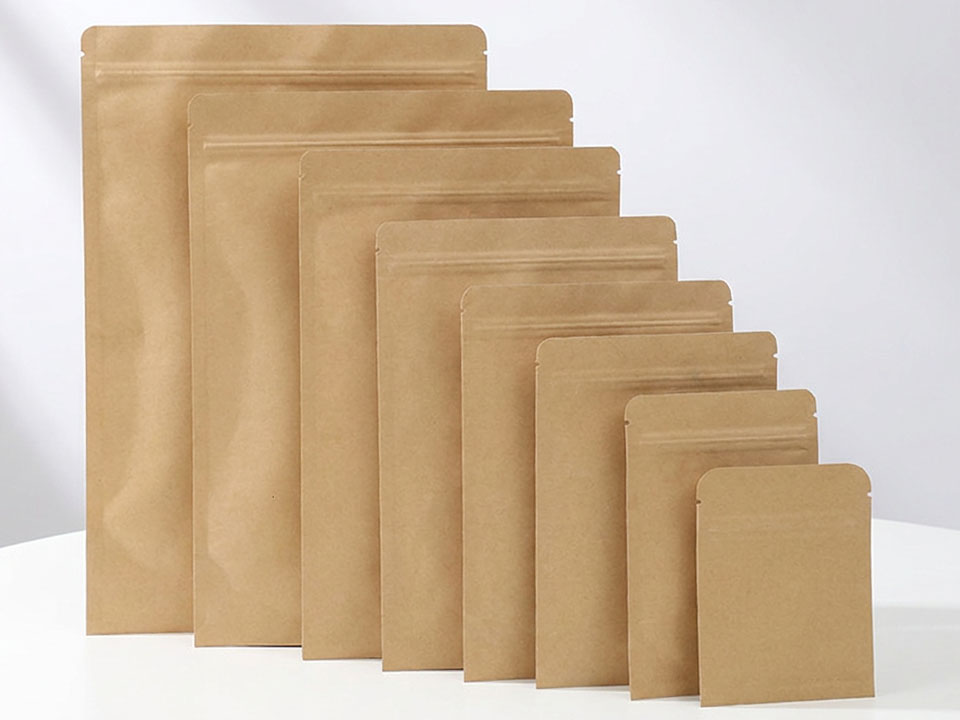
No. Higher GSM means more paper mass per square meter; it does not guarantee a proportionate increase in finished-bag carrying performance.
Bag strength is a system property involving:
This is particularly important when comparing supplier quotations. “180 GSM” from two suppliers does not prove that the resulting bags will perform identically.
A recurring problem in packaging discussions is handle failure rather than rupture through the middle of the paper panel. One recent r/Packaging discussion highlighted failure modes including tearing around handle areas, inadequate reinforcement, bottom openings, gusset deformation, and lamination cracking near folds. Community discussions are not laboratory evidence, but the sourcing lesson is useful: test the finished bag under realistic load, not only the paper specification.
Start with the artwork rather than treating printing as something added after material selection.
A simple one-color logo can work extremely well on natural kraft. Full-color images, subtle gradients, small typography, and demanding brand colors generally benefit from a smoother, brighter substrate such as white kraft, coated paper, or SBS.
Premium finishes introduce another layer of compatibility. Foil stamping, embossing, spot effects, lamination, and heavy solid printing all interact with the surface.
Ask for a production-equivalent proof when color is commercially important. A Pantone target shown on a monitor does not demonstrate how the ink will look on brown, textured, absorbent, or heavily coated stock.
Sustainable material selection is broader than choosing brown paper or adding a recycled logo.
The European Paper Recycling Council reported that 75.1% of paper and board consumed in Europe was recycled in 2024, with 53.4 million tonnes collected and recycled in the paper sector. That demonstrates the scale of the existing paper-recycling system, but individual packaging still needs to be designed so that coatings, laminates, adhesives, handles, and decorative elements do not unnecessarily obstruct recovery.
For a sourcing specification, separate the sustainability questions:
Fiber sourcing: Is virgin, recycled, or certified fiber required?
Material efficiency: Can the required performance be achieved with less material?
Recyclability: Are non-paper coatings or components necessary?
Reuse: Is the bag genuinely designed and tested for multiple uses, or does it merely feel heavy?
Manufacturing: Can the supplier provide the requested chain-of-custody or recycled-content documentation?
This avoids a common error: over-engineering a paper bag with extra board, plastic lamination, decorative components, and reinforcement while simultaneously marketing it as environmentally optimized.
Paper price is only one part of the quotation.
Cost also changes with bag dimensions, paper consumption, printing coverage, number of colors, lamination, foil tooling, embossing dies, specialty stock, ribbon or rope handles, eyelets, reinforcement boards, manual assembly, QC requirements, packaging method, MOQ, and freight volume.
A cheaper unit price can become expensive if the bag fails in use, requires rework, generates brand complaints, or consumes unnecessary freight space.
Procurement teams should compare equivalent specifications, not quotations where each supplier has silently interpreted “premium paper bag” differently.
A visually attractive approval sample does not prove that a bag is production-ready.
Before signing off, test the sample with the heaviest realistic SKU or product combination. Lift it repeatedly by the handles. Inspect the handle attachment and reinforcement area. Check whether the bottom distorts or opens. Fold and unfold the gussets. Look for lamination or ink cracking at creases.
For premium printed bags, also assess rub resistance, foil registration, surface scratches, color consistency, glue marks, edge quality, and whether packed bags scuff one another during transit.
If moisture exposure is foreseeable, include it in the test conditions instead of discovering the problem after launch.
An accurate paper bag RFQ should define enough variables for multiple suppliers to quote the same product.
At minimum, provide:
Where the buyer does not know the correct GSM or reinforcement design, provide the use conditions instead of guessing. A competent supplier should be able to propose a specification and explain why it suits the product.
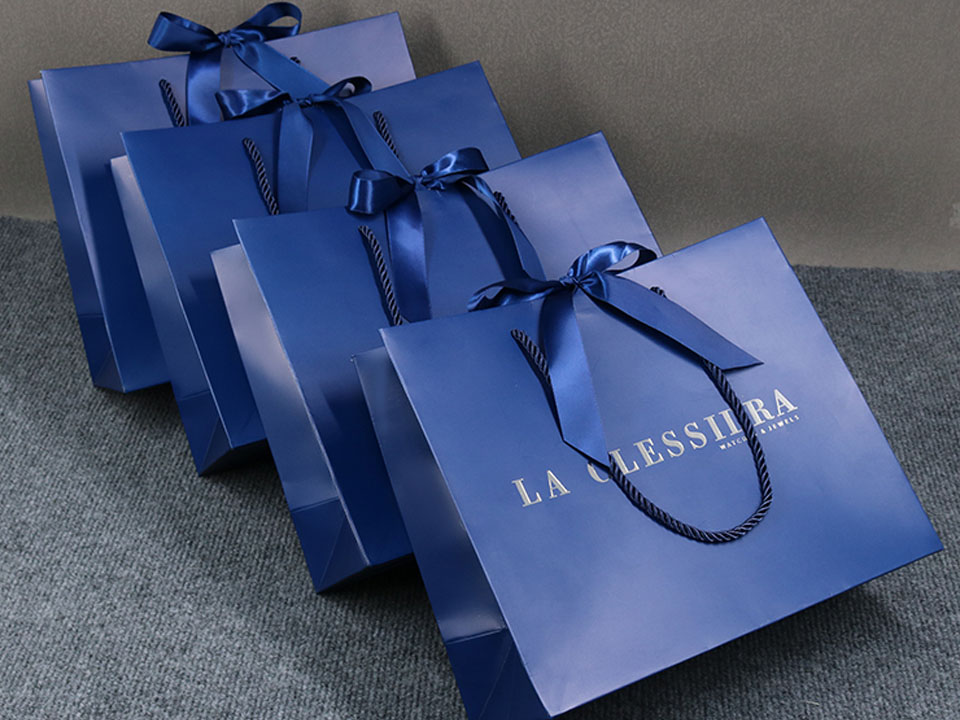
Kraft paper is one of the most widely used options because it combines practical strength, efficient converting, broad availability, and multiple printing possibilities. Premium retail bags also commonly use coated paper and paperboard.
Not automatically in every finished bag. Kraft is commonly selected for good tear and tensile performance, but finished-bag strength also depends on grammage, dimensions, handles, reinforcement, bottom structure, adhesives, and load distribution.
Coated art paper, SBS or ivory board, textured specialty paper, and dyed-through stocks are common premium choices. The correct material depends on printing detail, desired stiffness, handles, surface finish, product weight, and sustainability requirements.
No. GSM measures grammage rather than total bag strength. A properly engineered lower-GSM bag with appropriate fiber quality, handle reinforcement, and bottom construction can outperform a heavier but poorly designed bag.
White kraft, coated art paper, and smooth white paperboard usually provide better backgrounds for detailed multi-color graphics than natural brown kraft. Final artwork should still be proofed on the actual production substrate.
It depends on the lamination or coating, other non-paper components, and the recycling system available in the destination market. Buyers should evaluate the complete construction rather than assuming every paper-based bag has identical recyclability.
Comments