Let Our Packaging Experts Review Your Project
Share your packaging requirements before you leave. Our experts can review your dieline, artwork, materials, inserts, finishing, certifications, MOQ, quality checks, and delivery expectations.

Choosing among different perfume packaging box types is not simply a design decision. The structure affects bottle protection, insert engineering, filling efficiency, freight volume, shelf presentation, production cost, and the unboxing experience.
For fragrance brands, the right box depends on where the perfume will be sold and how it will move through the supply chain. A folding carton may be the rational choice for a high-volume retail fragrance, while a magnetic rigid box or double-door presentation box can make more sense for a limited-edition launch or premium gift set.
The strongest packaging specification starts with the bottle, distribution channel, and target price point—not with whichever box structure currently looks most luxurious.
The following comparison gives buyers a practical starting point.
| Perfume box type | Typical positioning | Bottle protection potential | Storage/freight efficiency | Relative production complexity | Best suited to |
|---|---|---|---|---|---|
| Folding carton | Mass to premium retail | Low–Medium | Excellent | Low | High-volume retail fragrances |
| Two-piece rigid box | Premium | Medium–High | Moderate | Medium | Gift sets and prestige fragrances |
| Magnetic closure box | Premium/Luxury | High with fitted insert | Moderate–Low | Medium–High | Luxury single bottles and sets |
| Book-style rigid box | Premium/Luxury | High | Moderate–Low | Medium–High | Story-led launches and discovery sets |
| Drawer box | Premium | High | Moderate | Medium–High | Single bottles and gift sets |
| Shoulder-neck box | Luxury | High | Low–Moderate | High | Prestige bottles and presentation packaging |
| Clamshell/hinged box | Premium/Luxury | High | Moderate–Low | High | Gift and collector packaging |
| Double-door rigid box | Luxury/Collector | High | Low | High | Limited editions and statement packaging |
| Special-shaped rigid box | Luxury/Special edition | Variable | Low | High | Brand launches and distinctive retail presentation |
These ratings are relative rather than universal. A well-engineered folding carton with an effective paperboard insert can outperform an oversized rigid box with poor bottle restraint.
That distinction matters more than many buyers expect.
Folding cartons are produced from printable paperboard that is die-cut, creased, supplied flat, and erected during packing. They are among the most practical choices for high-volume fragrance programs.
The main advantage is efficiency. Flat cartons use considerably less warehouse and inbound freight space than pre-assembled rigid boxes. Printing, embossing, foil stamping, specialty coatings, windows, and internal paperboard supports can still create a premium retail appearance.
Folding cartons work particularly well when:
The limitation is structural protection. Thin paperboard alone should not be expected to immobilize a heavy glass fragrance bottle. A locking bottom, internal platform, folded paper insert, molded pulp component, or another restraint system may be required.
For buyers, board grade is only one part of the specification. Crease quality, grain direction, coating durability, glue performance, and insert fit can have just as much influence on finished performance.
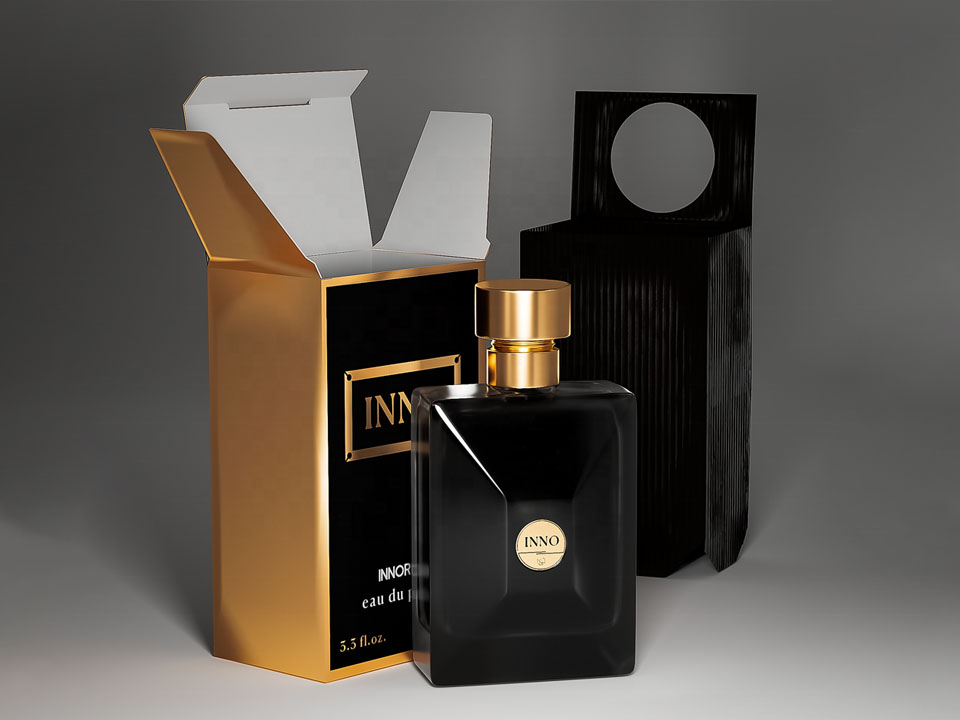
A two-piece rigid box uses a separate base and lift-off lid. It is one of the simplest rigid-box structures and can produce a substantial premium feel without the mechanisms required by magnetic or hinged constructions.
This format works well for perfume gift sets, larger bottles, discovery collections, and fragrances positioned above conventional folding-carton products.
The structure also offers considerable design flexibility. Buyers can specify:
The main consideration is dimensional control. Too much lid-to-base clearance produces a loose, inexpensive-feeling fit. Too little clearance can make the package difficult to open, especially when wrapping paper, humidity, glue application, and board tolerances are considered.
A physical pre-production sample is therefore more informative than approving dimensions from a dieline alone.
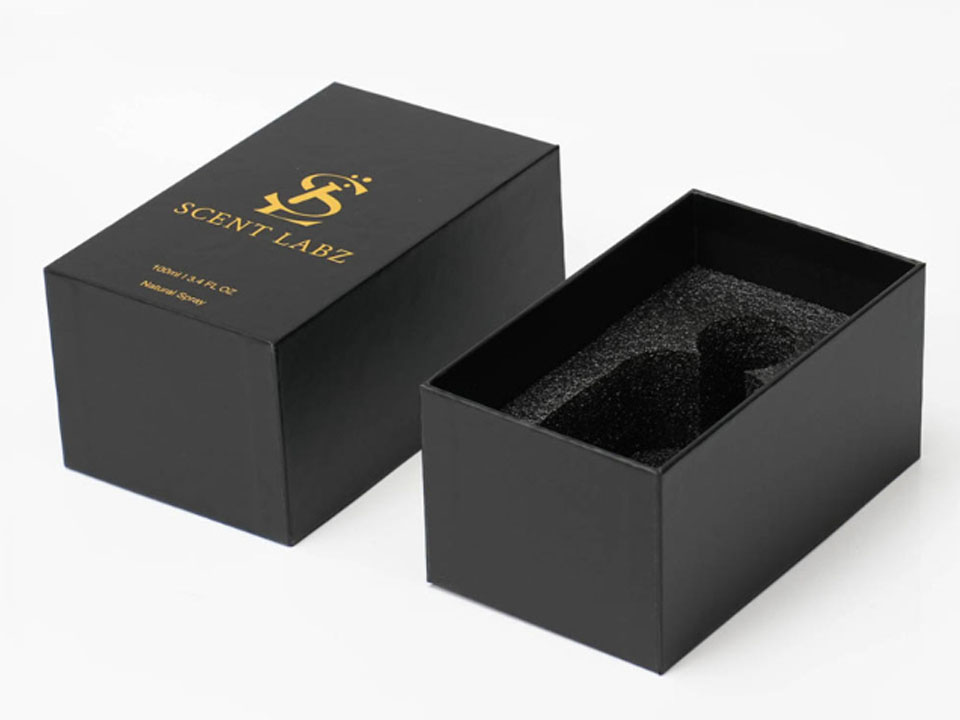
Magnetic closure boxes normally combine rigid board with a hinged flap containing concealed magnets. They are widely used where the opening action itself is intended to contribute to the presentation.
For perfume packaging, the magnetic closure is only the outer mechanism. Bottle protection still depends on the inner tray or insert.
A fitted foam, paperboard, molded pulp, or fabric-wrapped insert should restrain the bottle around structurally appropriate areas rather than simply filling empty space.
The same principle can be seen in this magnetic rigid fragrance-accessory box with a round foam insert, where the hinged structure and shaped insert work as separate packaging functions.
Magnetic boxes are suitable for premium fragrances, home-fragrance collections, discovery sets, influencer kits, and gift programs. Their disadvantages are higher assembly requirements, additional components, and reduced flat-pack efficiency unless a collapsible magnetic design is used.
Magnets also do not compensate for weak structural engineering. A satisfying closing action may improve presentation, but bottle security should remain the first engineering requirement.
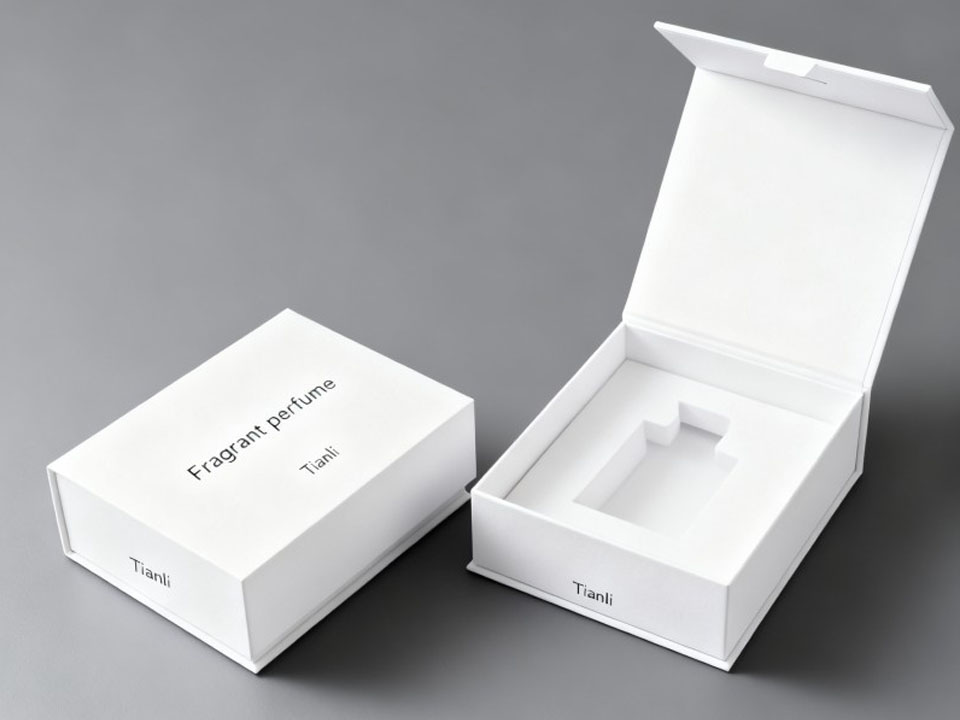
Book-style boxes open like a hardcover book, normally with a hinge along one side. The inside cover can provide additional space for brand storytelling, fragrance notes, instructions, artwork, or launch messaging.
That makes the format particularly useful for niche fragrance houses and products where storytelling forms part of the commercial proposition.
A practical example is a book-style fragrance gift box with a die-cut EVA foam insert. The structure combines a rigid outer presentation box with a separately engineered insert to reduce movement around the fragrance components.
Book-style boxes can also accommodate perfume discovery sets because the wide opening surface provides room for multiple samples, miniature bottles, or accessories.
The trade-off is material and labor intensity. Hinges must be accurately formed, wrapped edges need clean alignment, and thicker structures increase carton dimensions compared with basic folding packaging.
For a professional buyer, the question should therefore be less about whether book-style packaging “looks premium” and more about whether the storytelling value justifies the additional material, assembly, storage, and freight.
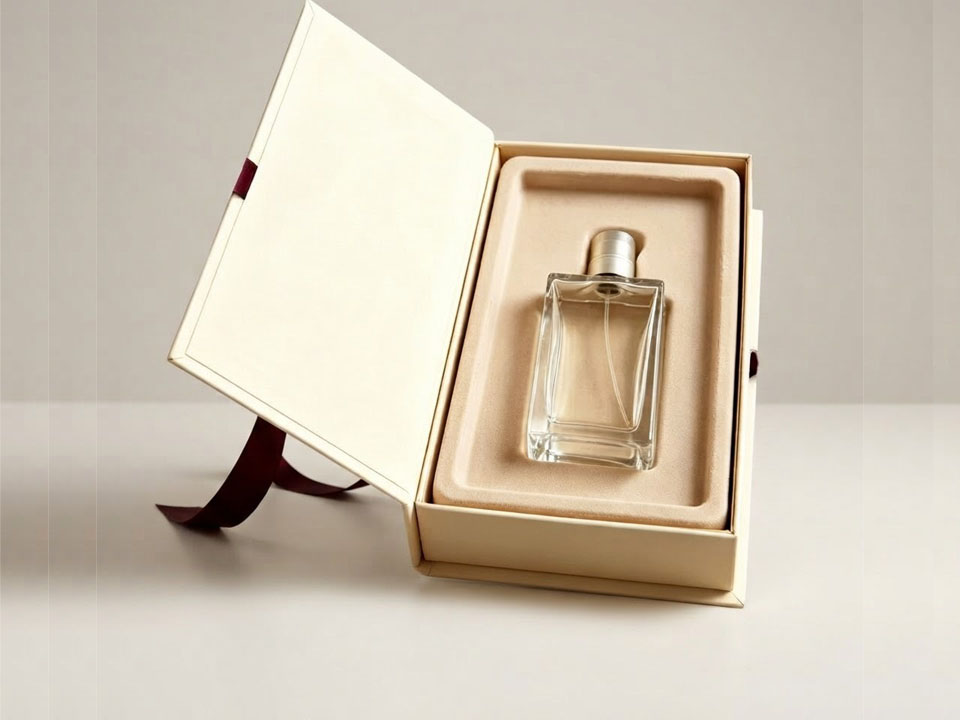
Drawer boxes consist of an outer sleeve and an inner sliding tray. A ribbon pull or finger notch is commonly added to control opening.
This structure is useful for fragrance packaging because the horizontal reveal can make the bottle feel deliberately presented rather than simply enclosed.
Drawer boxes are particularly effective for:
The primary engineering issue is friction.
If the drawer fit is too tight, the box can become difficult to open after wrapping material, humidity, board variation, or production tolerance is introduced. If it is too loose, the tray can slide out unintentionally.
The insert must also prevent the bottle from moving inside the drawer as the package changes orientation.
This is an area where prototype testing matters. Buyers should assess the complete loaded package rather than an empty box sample.
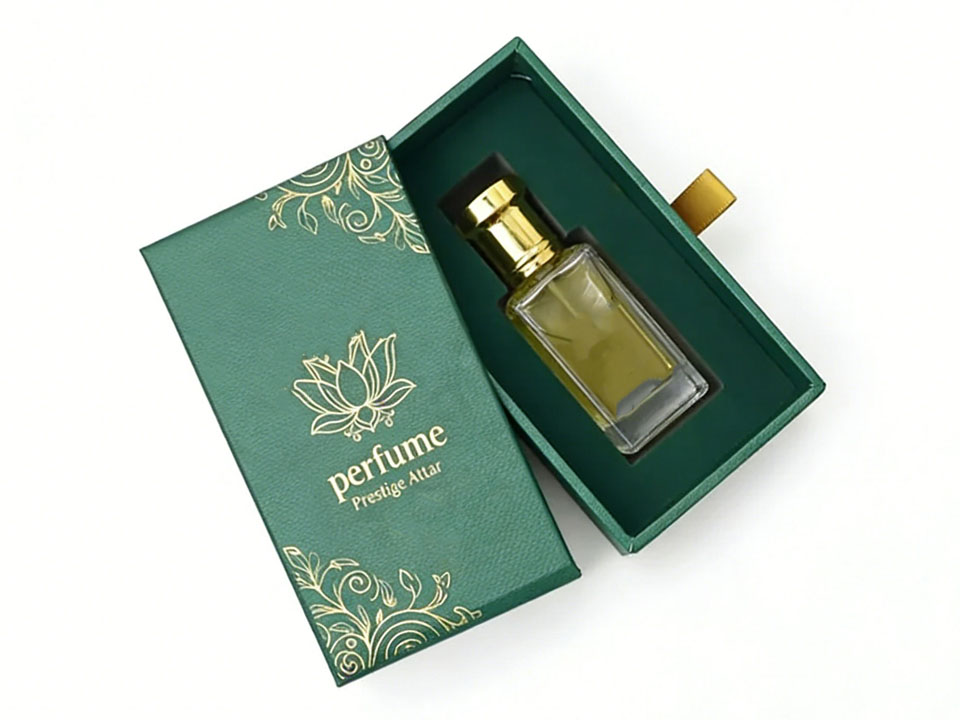
A shoulder-neck box has an inner neck or shoulder extending above the lower base, with a separate lid fitting around it. The construction creates a visible layered edge when opened.
For luxury perfume packaging, this can create a particularly precise presentation because the internal shoulder can frame the bottle and visually separate exterior and interior colors.
A black exterior, for example, might open to reveal a contrasting cream or metallic neck surrounding the fragrance bottle.
Shoulder-neck structures are appropriate when:
They require careful manufacturing control because the neck height, lid clearance, base dimensions, wrapping thickness, and insert geometry all interact.
This is not a structure where simply specifying “2 mm greyboard” is enough. A supplier needs the complete dimensional relationship between the bottle, insert, neck, base, and lid.
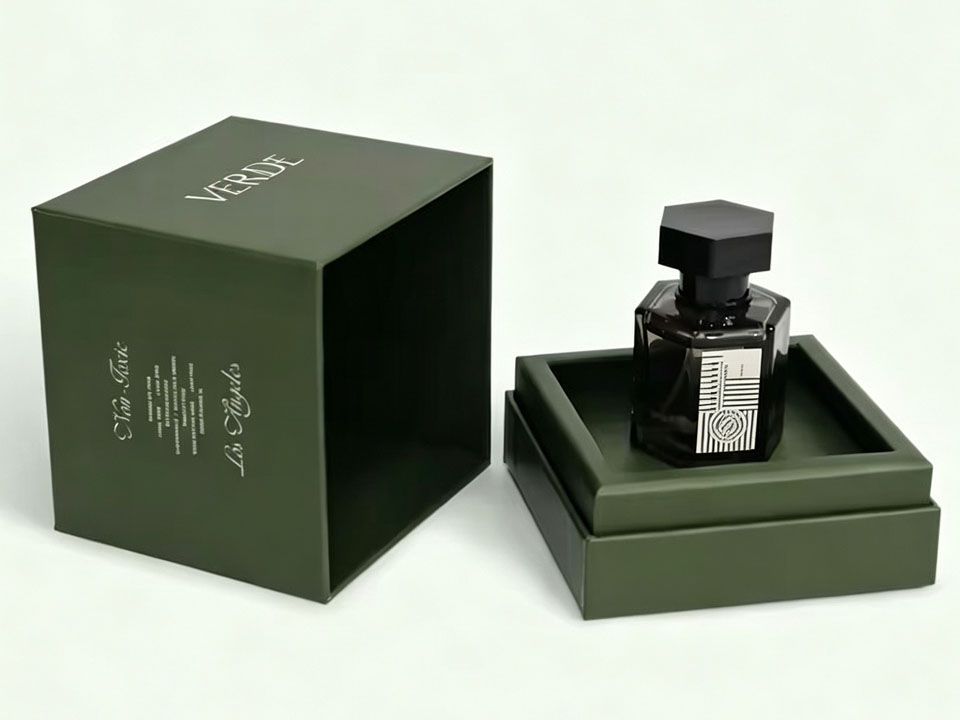
Clamshell rigid boxes use a hinged construction in which the lid and base remain permanently connected.
Compared with a removable two-piece lid, a clamshell structure keeps the presentation components together and can provide a controlled opening angle.
For fragrance brands, this format can be useful for gift sets, perfume-and-body-care combinations, collector editions, and retail presentations in which the box remains open during display.
The hinge area is usually the critical manufacturing point. Buyers should check repeated-opening behavior, paper cracking, exposed board edges, hinge alignment, and whether the lid places unwanted load on the insert when closed.
A high-quality clamshell package should be assessed as a mechanical structure, not just a printed object.
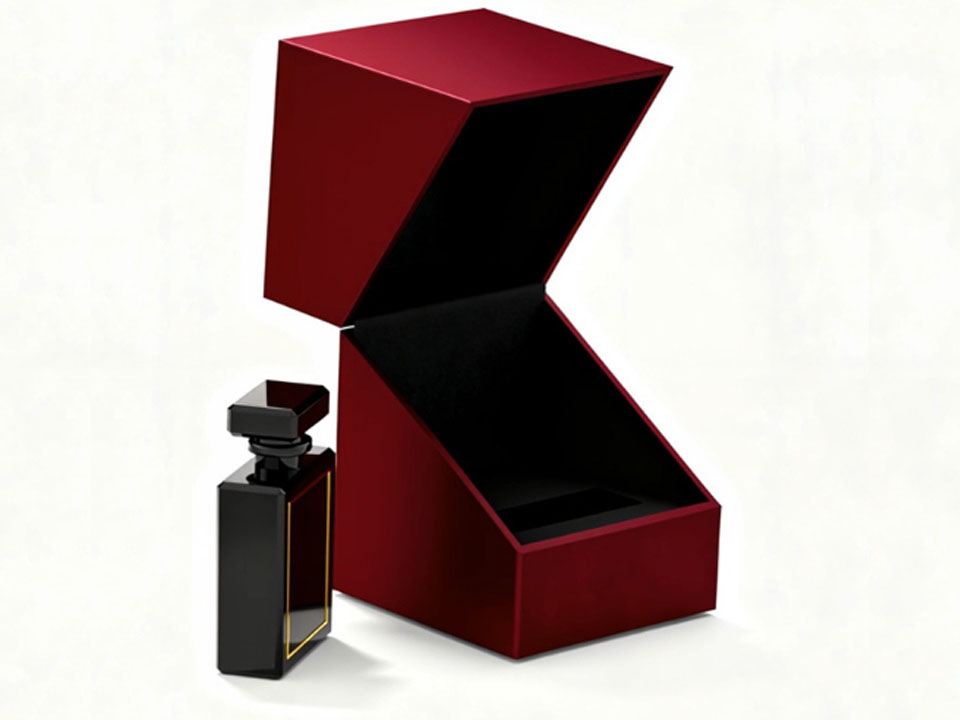
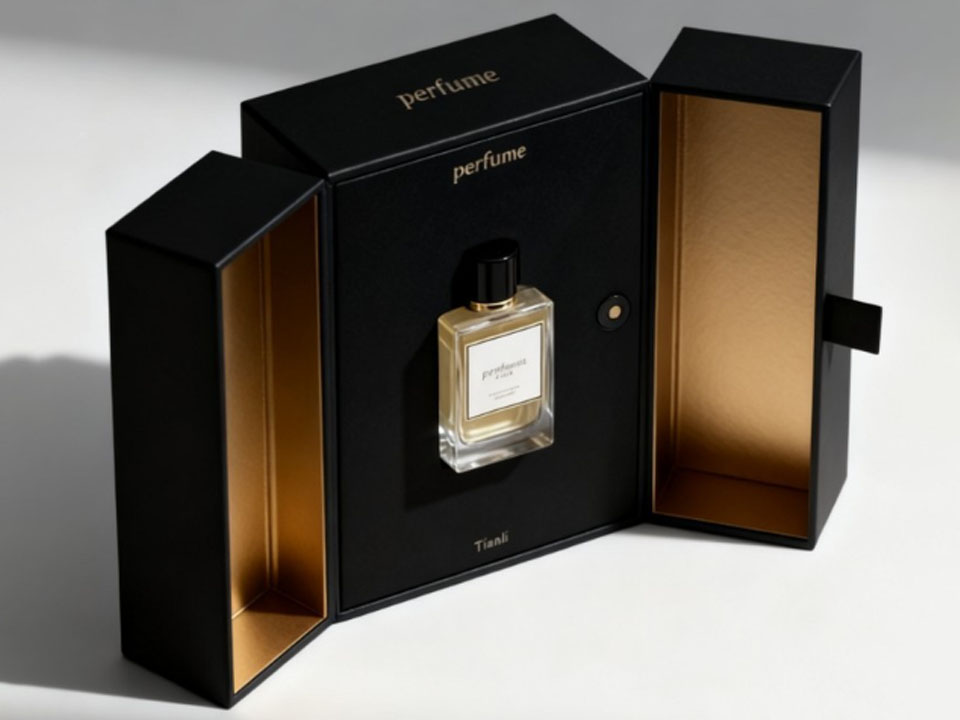
Double-door boxes use two hinged panels that open from the center to expose the fragrance. The structure creates a theatrical reveal and provides substantial surface area for interior graphics or decorative lining.
A double-door rigid perfume box with a satin-lined presentation insert illustrates how this structure can frame a tall fragrance bottle rather than simply contain it.
The format works best for prestige launches, collector packaging, promotional presentations, flagship products, and limited-edition fragrances.
However, this is also a good example of why more elaborate packaging is not automatically better packaging.
Double doors add board, wrapping material, hinges, assembly operations, dimensional complexity, and shipping volume. If those features do not contribute meaningful brand value, product protection, reuse, or presentation, a simpler rigid format may provide better total economics.
That issue is becoming increasingly relevant for products sold in Europe.
Under the EU Packaging and Packaging Waste Regulation, Article 10 requires manufacturers or importers, by January 1, 2030, to design packaging so that weight and volume are reduced to the minimum necessary for functionality. The regulation also addresses features intended only to inflate perceived product volume, subject to specified exceptions.
This does not mean premium perfume packaging must disappear. It means decorative complexity increasingly needs a defensible function.
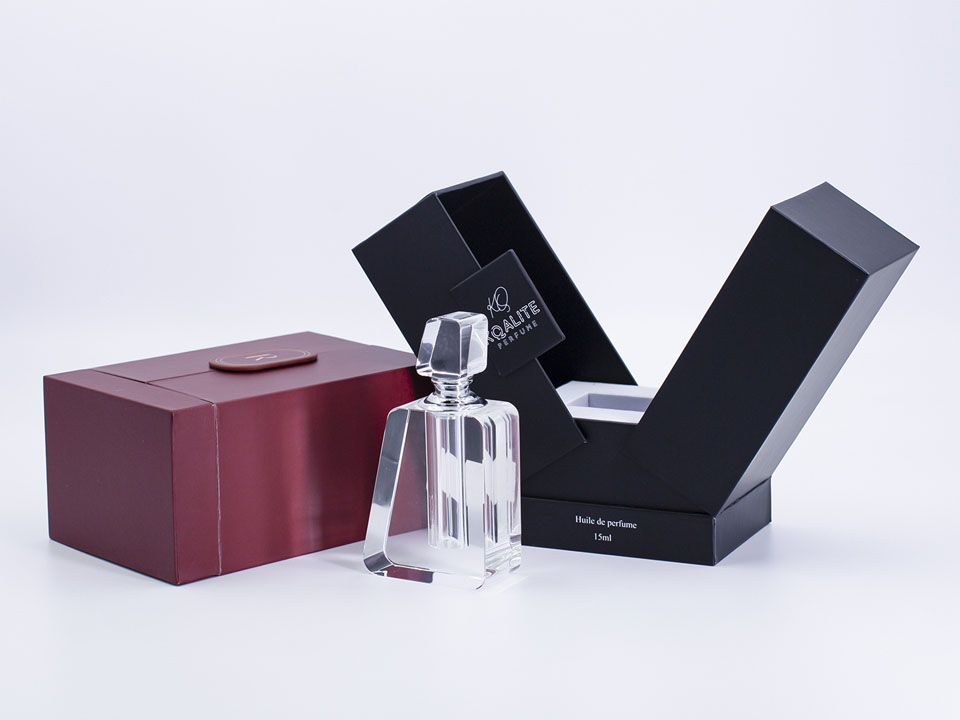
Hexagonal, octagonal, cylindrical-look, heart-shaped, and other custom rigid structures can differentiate a fragrance at launch or reinforce a bottle’s geometry.
They are most appropriate when the structure supports a recognizable brand asset rather than novelty alone.
Special shapes typically create several sourcing challenges:
A useful custom perfume box product range shows how fragrance packaging can extend from straightforward folding cartons through magnetic, drawer, book-style, octagonal, and double-door structures.
Distinctive geometry can be commercially valuable, but buyers should test whether the structure remains practical when hundreds or thousands of units are packed into master cartons and shipped internationally.
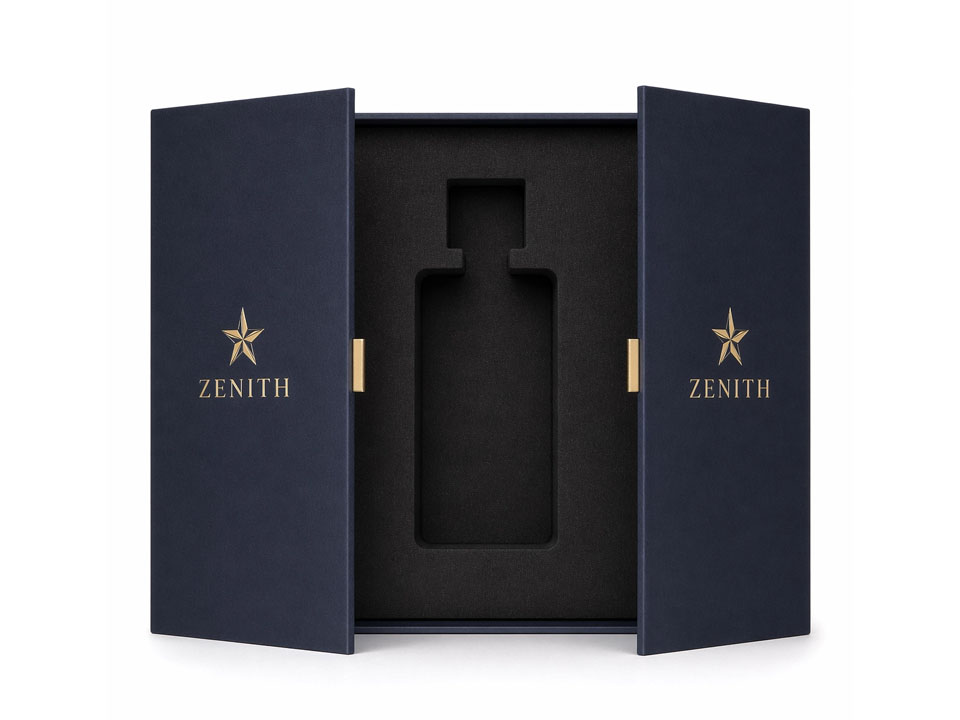
One of the easiest mistakes in perfume packaging development is spending most of the design effort on the outside of the box while treating the insert as a secondary component.
For a glass fragrance bottle, the opposite approach is often more rational.
A recurring complaint in fragrance communities concerns bottles or heavy caps moving inside oversized packaging, sometimes damaging the box, nozzle, or bottle during shipment. These discussions are qualitative consumer observations rather than controlled packaging tests, but the pattern is commercially relevant: apparent luxury cannot compensate for poor product restraint.
The insert should be designed from actual bottle samples or verified production drawings. Key measurements may include bottle width and depth, shoulder geometry, cap diameter, pump collar, center of gravity, and any fragile decorative elements.
Common perfume box insert options include:
| Insert type | Advantages | Main limitations | Typical application |
|---|---|---|---|
| Folded paperboard | Lightweight, printable, easier material separation | Lower cushioning than foam | Retail cartons and sustainability-focused programs |
| Molded pulp | Paper-based, shaped support | Surface appearance may be less refined | Protective premium packaging |
| EVA foam | Precise cutting, strong presentation and restraint | Mixed-material construction and disposal considerations | Luxury rigid boxes |
| PU or sponge foam | Soft cushioning | Can compress and vary in appearance | Gift packaging |
| Fabric-wrapped insert | Premium appearance | Extra labor and material complexity | Prestige and collector boxes |
Do not specify an insert only as “black EVA” or “paper tray.” The RFQ should define the bottle dimensions, required fit, exposed areas, removal method, surface treatment, and whether accessories must share the tray.
Rigid perfume boxes are frequently compared by board thickness because it is an easy specification to quote.
But thicker board alone does not solve the main failure modes of a fragile fragrance pack.
Protection is a system involving:
An excessively large rigid box can actually create additional problems if the bottle remains poorly restrained.
It also increases warehouse volume and freight cube.
For brands selling into the EU, this should be considered alongside regulatory pressure toward packaging minimization. Regulation (EU) 2025/40 states that packaging placed on the EU market must, by the relevant 2030 requirement, be designed to minimize necessary weight and volume while maintaining functionality.
The commercial objective should therefore be adequate engineered protection with deliberate presentation, rather than maximum material usage.
For e-commerce or distribution programs with meaningful damage risk, transit testing can provide substantially better evidence than subjective handling of a prototype.
The International Safe Transit Association describes its 3-Series as general simulation tests designed to reproduce damage-producing forces and conditions found in distribution. ISTA Procedure 3A applies to individual packaged products of 70 kg (150 lb) or less moving through parcel delivery systems.
That does not mean every perfume SKU automatically requires ISTA 3A certification. The test plan should match the actual route and package configuration.
A useful development sequence is:
A beautiful empty box sample tells procurement very little about parcel performance.
Alcohol-based fragrance products can also introduce dangerous-goods transportation requirements depending on their formulation, classification, quantity, route, and transport mode.
IATA states that responsibility for correct dangerous-goods classification rests with the shipper, and its Dangerous Goods Regulations cover classification, packing, marking, labeling, documentation, and handling for air transport.
For a packaging buyer, the practical lesson is not to assume that a decorative perfume box is the complete transport solution.
Sales packaging, protective secondary packaging, dangerous-goods-compliant packaging where applicable, and the logistics carton can have different functions.
Before finalizing the retail box, confirm the intended markets and logistics routes with the relevant compliance and freight teams.
Box structure is only one cost variable.
For custom fragrance packaging, quotation differences can result from:
Board and wrapping material. Rigid greyboard, specialty papers, metallized papers, coated papers, and textured wraps have different material and converting requirements.
Structure. Folding cartons normally require fewer assembly operations than shoulder-neck, magnetic, double-door, or complex special-shaped rigid boxes.
Insert construction. A simple folded paper tray is fundamentally different from multi-layer die-cut EVA with fabric covering.
Print process. Large solid colors, tight brand-color tolerances, specialty inks, and interior printing can affect production control.
Finishing. Foil stamping, embossing, debossing, spot UV, lamination, edge treatment, and multiple finishing passes increase process steps.
Order quantity. Tooling and setup costs are distributed across the production run.
Assembly and packing. Complex structures require more manual operations and QC.
Freight cube. A slightly cheaper box can become more expensive on a landed-cost basis if it occupies substantially more shipping volume.
This is why procurement teams should compare total landed packaging cost rather than unit box price alone.
A supplier assessment should go beyond whether the factory can make an attractive sample.
Look at whether the supplier can control the transition from prototype to repeat bulk production.
Useful questions include:
Buyers evaluating broader custom perfume box manufacturing options should compare structural engineering capability and production controls alongside the available decoration processes.
The supplier that offers the most finishes is not necessarily the supplier that will produce the most consistent finished package.
An RFQ for perfume packaging becomes much more accurate when the supplier receives the physical and commercial constraints at the beginning.
At minimum, provide:
| RFQ item | Information to provide |
|---|---|
| Bottle | Exact dimensions, weight, shape and preferably physical sample or CAD |
| Cap and pump | Cap size, removable parts and vulnerable areas |
| Box style | Folding carton, magnetic, drawer, book-style, two-piece, etc. |
| Finished dimensions | Internal or external dimensions, clearly identified |
| Board/material | Required grade or performance target |
| Insert | Material preference and required bottle restraint |
| Printing | Artwork, colors and print method if specified |
| Finishes | Foil, emboss, deboss, coating, lamination, specialty paper |
| Quantity | Initial order plus expected repeat volumes |
| Sales market | Countries or regions where the fragrance will be sold |
| Distribution | Retail, e-commerce, parcel, palletized, gifting or mixed |
| Testing | Required performance or transit-test protocol |
| Packing | Units per master carton and any pallet requirements |
| Schedule | Sample approval deadline and required delivery date |
If the final bottle is not ready, tell the supplier that the dimensions are preliminary. Do not allow a prototype made around an approximate bottle to become the uncontrolled production standard.
For perfume packaging, a few millimeters can change insert fit, opening resistance, presentation alignment, and master-carton utilization.
Folding cartons are widely suited to volume retail fragrance packaging, while rigid boxes are commonly selected for premium and luxury programs. The right structure depends on product value, distribution channel, bottle protection requirements, and target packaging cost.
No single outer structure guarantees the best protection. A rigid box with a correctly engineered fitted insert can provide strong restraint, but insert geometry, bottle clearance, master-carton packing, and distribution conditions are equally important.
Not necessarily. Magnetic boxes provide a controlled hinged opening and premium presentation, while two-piece boxes use a simpler construction. The better choice depends on required presentation, budget, production volume, storage efficiency, and reuse expectations.
EVA and other foam inserts provide precise bottle positioning and are common in premium presentations. Paperboard and molded-pulp inserts can reduce material complexity. Selection should be based on bottle geometry, protection requirements, visual positioning, and end-of-life objectives.
There is no universal clearance value. The correct allowance depends on bottle geometry, weight, cap design, insert material, compression characteristics, and manufacturing tolerances. The insert should be validated using production-equivalent bottles and physical samples.
No. Greater thickness increases weight and does not automatically improve bottle protection. Board thickness should be engineered together with box geometry, insert design, transport packaging, expected loads, presentation requirements, and freight considerations.
Provide bottle dimensions and weight, box structure, insert requirements, materials, printing, finishes, quantity, destination market, packing method, testing requirements, and delivery schedule. A physical bottle sample or verified CAD greatly improves structural accuracy.
Comments