Let Our Packaging Experts Review Your Project
Share your packaging requirements before you leave. Our experts can review your dieline, artwork, materials, inserts, finishing, certifications, MOQ, quality checks, and delivery expectations.

A VIP card may be physically small, but its packaging carries a disproportionately large branding role. Membership cards, premium payment cards, hospitality gift cards, invitation cards, loyalty programs, and private-client credentials are often meant to communicate exclusivity before the recipient even sees the card.
For most of these applications, rigid paperboard is the strongest material starting point. It combines dimensional stability with a paper-wrapped surface that can support foil stamping, specialty papers, embossing, printing, magnetic closures, ribbons, and engineered inserts. It also gives buyers more structural freedom than a folding carton without introducing the weight and material complexity of metal, wood, or many plastic formats.
That does not mean the thickest possible board is automatically the best specification. The better approach is to engineer the entire packaging system—core board, wrap, structure, insert, closure, finish, and shipping protection—around the product and presentation objective.
Rigid paperboard packaging normally uses a dense paperboard or greyboard core that is cut and assembled into a fixed three-dimensional structure, then wrapped with printed, coated, textured, or specialty paper.
Unlike a conventional folding carton, a rigid box generally stays assembled rather than collapsing flat. The core provides stiffness and dimensional stability; the wrap provides most of the visible color, print, texture, and surface finish.
This distinction matters in VIP packaging because the structural and decorative layers can be specified separately. A procurement team can choose a board construction for performance, then select the outer wrap according to brand requirements.
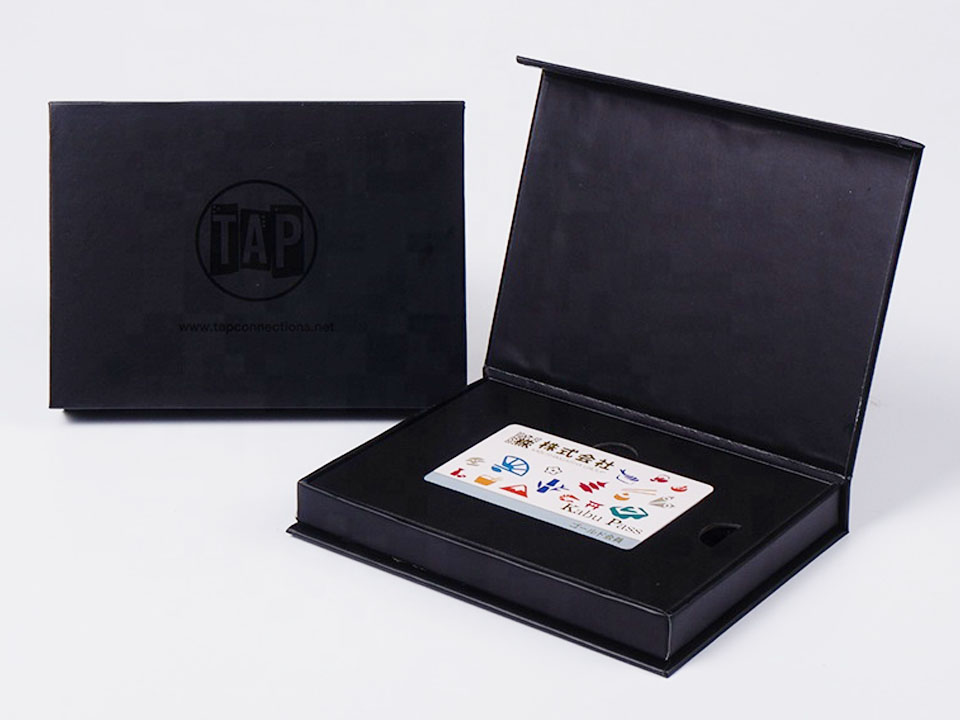
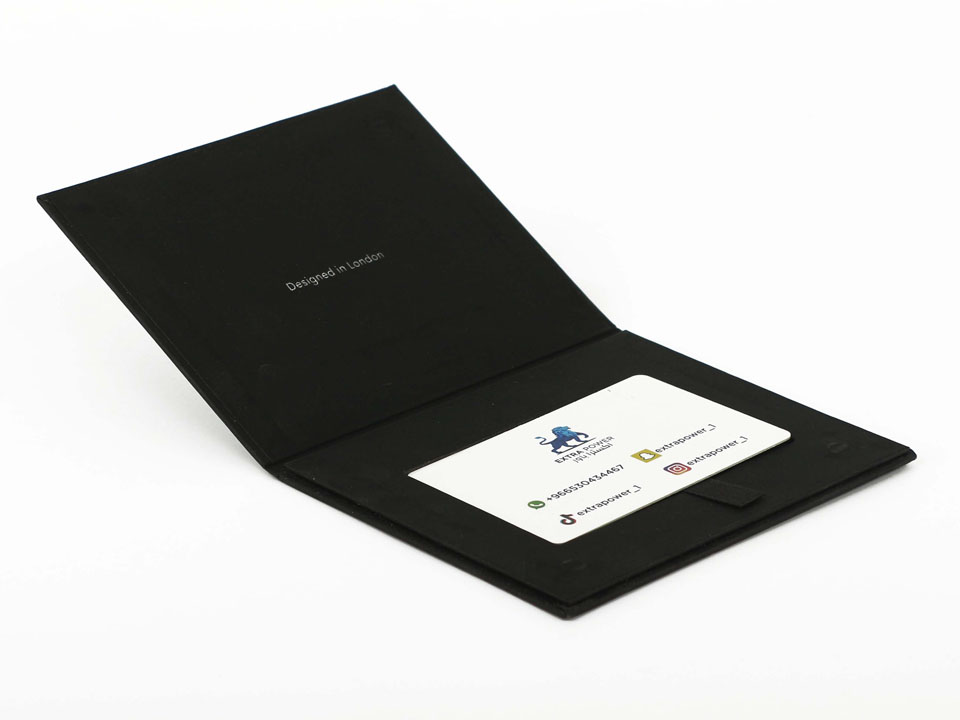
For example, a black magnetic membership card box with a fitted paperboard insert combines a rigid paperboard body, hinged construction, hidden magnetic closure, matte black wrap, and die-cut card holder. :contentReference[oaicite:0]{index=0}
Paperboard itself should not be specified by vague terms such as “thick cardboard.” ISO 534 defines standardized methods for determining the thickness and apparent density of paper and board. Thickness is therefore a measurable specification rather than simply a visual judgment. :contentReference[oaicite:1]{index=1}
Bending resistance is another relevant property. TAPPI/ANSI T 489 specifically covers the measurement of bending resistance in paper and paperboard. :contentReference[oaicite:2]{index=2}
The practical implication is straightforward: board thickness and board performance are related, but they are not interchangeable specifications.
The main advantage is not any single property. It is the combination of rigidity, presentation, customization, manufacturing flexibility, and commercial practicality.
| Material | Premium Presentation | Structural Rigidity | Print & Finish Flexibility | Insert Integration | Main Trade-Off | Best Use |
|---|---|---|---|---|---|---|
| Rigid paperboard | High | High when engineered correctly | Very high | Excellent | More assembly and shipping volume than folding cartons | VIP cards, membership kits, luxury gifting |
| Folding carton | Medium to high | Low to medium | Very high | Good | Less substantial hand feel and protection | Higher-volume lightweight programs |
| Corrugated board | Medium | Medium to high | Medium | Good | Shipping-oriented appearance unless heavily converted | Transit-heavy packs |
| Plastic | Variable | High | Moderate | Excellent | Recycling and material-compliance complexity | Moisture-resistant or specialty applications |
| Metal | Very high | Very high | Moderate | Good | Weight, cost and freight | Collectibles and long-term presentation |
| MDF/wood-based structures | Very high | Very high | Moderate | Good | Weight, material complexity and logistics | Keepsake or permanent display packaging |
For most VIP card programs, rigid paperboard occupies the useful middle ground. It feels substantially more permanent than a folding carton while remaining far easier to print, wrap, customize, and ship than a metal or wooden presentation case.
Rigid paperboard is best treated as the default premium solution, not an absolute answer for every project.
A luxury credit-card launch, private banking welcome kit, hotel membership program, beauty-club card, or restaurant gift-card presentation usually benefits from it.
A waterproof access credential used repeatedly outdoors may not.
Likewise, a low-cost promotional card mailed by the millions may be better suited to a folding carton, envelope, or paperboard sleeve.
VIP packaging is unusually sensitive to proportion and fit.
A card measuring only a few millimeters thick can look inexpensive when it floats inside an oversized cavity. A lid that flexes, corners that feel soft, or an insert that shifts during handling can undermine an otherwise expensive print design.
Rigid paperboard allows the packaging engineer to control:
A rigid magnetic payment card box demonstrates why this matters. Its greyboard structure, specialty paper wrap, magnetic hinged format, printed finish, and integrated paperboard card holder operate as one system rather than as separate decorative features. :contentReference[oaicite:3]{index=3}
This is one of the most common specification errors.
Increasing board thickness may increase perceived substance, but excessive thickness can also increase material consumption, box dimensions, shipping volume, corner-wrapping difficulty, and unit cost without improving the user experience.
A small VIP card presentation folder does not need the same structural specification as a large perfume gift set.
Instead of telling a supplier simply to “use thicker board,” buyers should confirm:
board type + actual caliper + box dimensions + structure + intended load + insert design + approved physical sample.
For technically controlled programs, stiffness or bending resistance can also be incorporated into the supplier specification where appropriate.
One reason rigid paperboard performs particularly well in luxury packaging is that the structural core does not have to be the visible surface.
The greyboard can do the structural work while a separate wrap creates the brand experience.
That wrap might use:
Brand decoration can then include foil stamping, embossing, debossing, spot effects, printed patterns, interior messages, or contrasting inside and outside colors.
A foil-printed rigid restaurant gift card presentation folder illustrates the advantage. The rigid wrapped-paper structure provides the physical format, while foil decoration and printed interior messaging create the hospitality-specific brand presentation. :contentReference[oaicite:4]{index=4}
This separation also helps buyers control cost. Not every surface needs multiple finishing processes.
A strong VIP box can sometimes look more premium with one carefully positioned foil logo on high-quality textured paper than with foil, spot UV, embossing, lamination, and metallic ink applied simultaneously.
More finishing does not automatically produce more luxury.
The insert determines what happens after the lid opens.
For a VIP card, the buyer normally wants the card to appear deliberately positioned rather than merely stored.
Common insert solutions include paperboard trays, die-cut card slots, recessed paper platforms, foam inserts, molded fiber, ribbon retainers, and combinations of these systems.
The correct option depends on whether the package contains only a card or also includes a booklet, voucher, key, USB device, sample product, welcome letter, or gift.
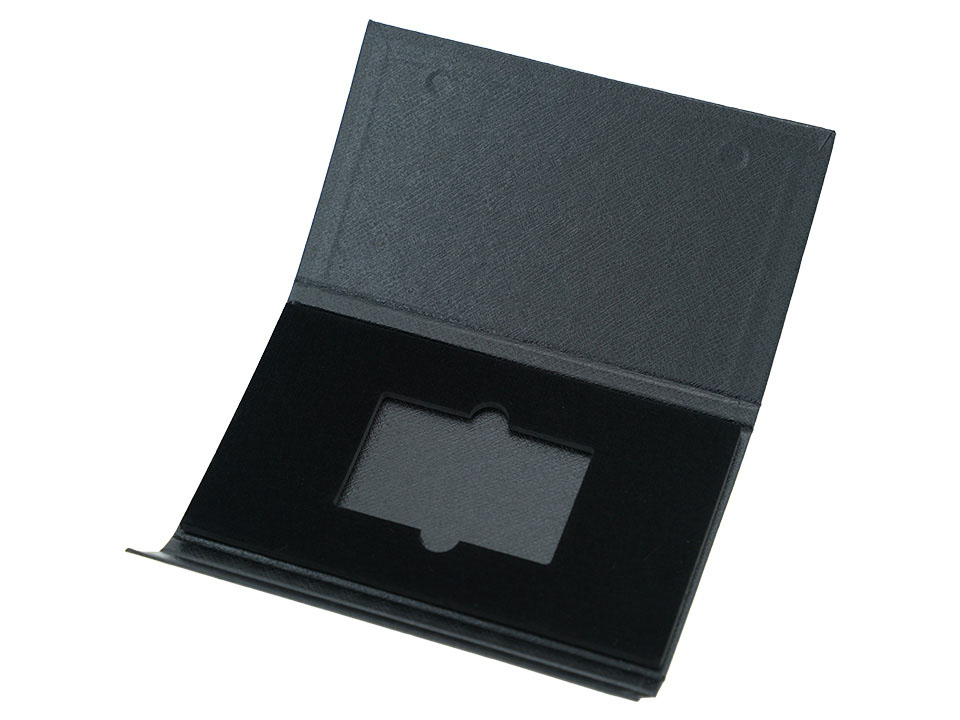
A cosmetic VIP membership card box with a foam insert uses a die-cut foam interior to secure the card while supporting a more gift-oriented beauty presentation. :contentReference[oaicite:5]{index=5}
By contrast, a book-style membership card box with a paperboard holder and ribbon uses a recessed paperboard card area rather than relying on foam. :contentReference[oaicite:6]{index=6}
Neither is inherently superior.
Paperboard inserts can simplify the material system and may suit programs prioritizing a paper-led construction. Foam offers precise cushioning and a darker, dense visual presentation, but it adds another material to the package.
For a flat plastic membership card, excessive cushioning often adds cost without solving a real protection problem. Foam makes more sense when the box also contains fragile or dimensional components.
VIP programs often need a controlled opening sequence rather than a basic lid.
Rigid paperboard supports several structures particularly well:
A hinged lid with concealed magnets provides a clear open-and-close action without visible hardware.
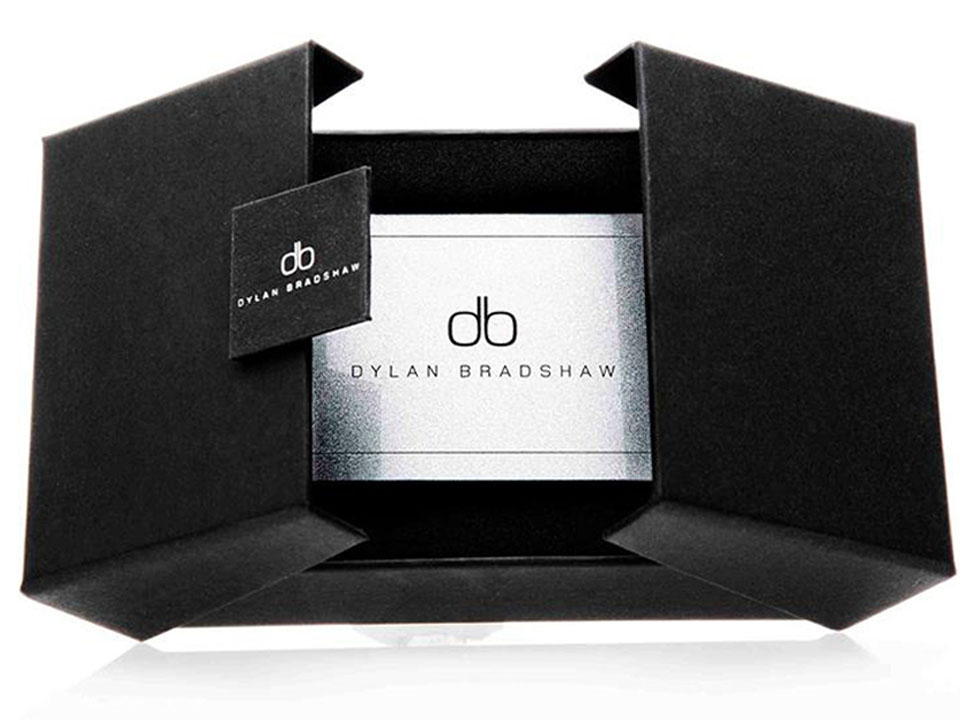
A luxury magnetic VIP card box is suitable when the package should resemble a premium invitation, private-client kit, or executive presentation rather than a conventional retail carton. :contentReference[oaicite:7]{index=7}
A book-style box provides a broad interior lid surface for welcome messages, program details, terms, QR codes, campaign artwork, or brand storytelling.
This is particularly useful for hospitality, finance, clinics, beauty programs, and paid memberships where the package needs to communicate information as well as hold a card.
A separate lid and base create a more traditional gift-box experience. They can work well when the card is accompanied by gifts, printed collateral, or multiple components.
Drawer structures introduce a slower reveal and are useful when the card is part of a more elaborate onboarding or gifting sequence. The trade-off is additional components and assembly.
Structure should therefore be chosen around the presentation sequence, not merely around which box looks most complicated.
Paper-based construction gives buyers several useful sustainability pathways, but a paperboard core does not make the finished package automatically sustainable or recyclable.
Magnets, plastic lamination, foam, synthetic fabric, metallic components, ribbons, adhesives, or heavily laminated decorative papers can affect end-of-life options.
A better design question is:
How easily can the package be recovered, separated, recycled, or reused in the target market?
For buyers making responsible-sourcing claims, FSC certification is also a supply-chain issue rather than simply a material description. FSC states that brands seeking an FSC label should verify that the supplier of the final product is certified, specify FSC-certified material, and request the appropriate label. Only certified companies are authorized to place FSC labels on products or packaging. :contentReference[oaicite:8]{index=8}
European sourcing teams have an additional reason to treat material selection as an engineering decision. The EU Packaging and Packaging Waste Regulation began applying from 12 August 2026, and the European Commission states that requirements including recyclability of all packaging will apply from 2030. :contentReference[oaicite:9]{index=9}
For an EU-bound VIP packaging project, that means a buyer should not stop at “paper box.” The complete bill of materials matters.
A paperboard box with a removable magnet and paper insert presents a different recovery scenario from a paperboard box permanently bonded to several layers of plastic foam, synthetic fabric, and film.
Rigid paperboard is more expensive than a basic folding carton because manufacturing usually involves more material, more converting steps, and more assembly.
The main cost drivers are:
| RFQ Variable | Why It Changes Cost |
|---|---|
| Finished dimensions | Larger boxes consume more board, wrap and packing volume |
| Board specification | Caliper, density and material grade affect structural cost |
| Box structure | Magnetic, drawer and multi-piece structures require more components and assembly |
| Wrap paper | Specialty, textured and dyed papers can cost more than standard coated paper |
| Printing | CMYK, Pantone and interior printing require different production setups |
| Finishing | Foil, embossing, debossing and spot effects add process steps and tooling |
| Insert | Paperboard, foam and molded solutions have different tooling and assembly requirements |
| Magnets/ribbons/accessories | Add components, placement operations and QC points |
| Quantity | Setup and tooling costs are distributed over the production run |
| Packing method | Individual sleeves, tissue, protective bags or master-carton requirements add cost |
| Freight | Rigid boxes usually occupy more volume than flat-packed cartons |
This is why the lowest quoted unit price should not be treated as the lowest purchasing cost.
A cheaper structure that arrives with scuffed wraps, poorly aligned inserts, inconsistent foil, damaged corners, or oversized export cartons can create a higher total landed cost than a slightly more expensive specification engineered correctly from the beginning.
A recurring sourcing problem is approving an attractive sample without converting it into a detailed mass-production specification.
A recent packaging-design discussion raised exactly this issue: buyers reported concern about bulk production arriving with color differences, weak corners, or inconsistent printing even after a good sample. Responses emphasized using physical samples, defined color targets, agreed tolerances, production checks, and inspection of multiple units from the run rather than relying on the first finished piece. :contentReference[oaicite:10]{index=10}
That is particularly relevant to rigid boxes because many quality problems are assembly-related.
A buyer should inspect:
The pre-production sample should record the actual board, wrap, finish, insert, closure, and construction that mass production is expected to match.
A beautiful sample made from different materials is not a useful production reference.
A presentation box and a shipping carton perform different jobs.
The rigid paperboard box protects the VIP card from normal handling and creates the customer-facing presentation. It should not automatically be expected to absorb courier drops, warehouse compression, rain exposure, pallet damage, or international freight conditions by itself.
For direct-to-consumer or international shipment, the presentation box may still require:
Trying to make the VIP presentation box thick enough to replace the logistics system usually produces an oversized and unnecessarily expensive primary package.
Rigid paperboard should be reconsidered when:
Shipping efficiency dominates the project. A folding carton or collapsible rigid structure may reduce freight and warehouse volume.
The packaging will face regular water exposure. A specialty polymer or another moisture-resistant format may be more appropriate.
The package is intended as a permanent archival case. Metal, engineered wood, or specialty long-life structures may justify the added weight and cost.
The program is extremely price-sensitive and high-volume. A printed folding carton or sleeve may provide enough branding without the assembly cost of a rigid box.
The package itself must survive harsh distribution without a secondary shipper. Corrugated engineering may be more relevant than luxury rigid-board construction.
The correct question is therefore not “Is rigid paperboard the strongest material available?”
It is:
Which material provides enough structural performance while still meeting the branding, manufacturing, logistics, sustainability, and cost requirements of the VIP program?
For most premium VIP card applications, rigid paperboard wins that comparison.
An RFQ that only says “black luxury VIP box, 5,000 pieces” leaves too many variables open.
Provide the supplier with a controlled specification instead.
At minimum, define:
This information allows competing suppliers to quote approximately the same specification. Without it, a buyer may receive three prices for three materially different boxes and mistakenly treat them as directly comparable.
There is no universal best thickness. Select the board according to box dimensions, structure, insert, product weight, and required stiffness. A physical prototype should confirm that the chosen board provides sufficient rigidity without unnecessary bulk.
“Cardboard” is a broad everyday term. Rigid luxury boxes normally use dense solid paperboard or greyboard rather than corrugated board. The structural core is then wrapped with decorative or printed paper.
They can be compatible with paper recycling systems, but recyclability depends on the complete construction. Magnets, foam, plastic film, fabric, adhesives, and decorative laminates may affect sorting or recovery. Buyers should assess the full material system.
For premium indoor presentation, paperboard usually provides better printing, finishing, tactile variety, and paper-led branding. Plastic may be preferable when moisture resistance, transparency, or repeated high-wear use is more important.
For a single card, a die-cut paperboard holder is often sufficient. Foam is more useful when the packaging contains multiple components, fragile products, or requires a dense luxury interior. Choose the insert according to function rather than appearance alone.
Usually yes for courier or international distribution. A rigid presentation box is primarily customer-facing packaging. A mailer or corrugated shipping carton should handle drops, compression, abrasion, and logistics exposure.
Approve the final structure, board, wrap, dimensions, color target, printing, foil or other finishes, insert, closure function, artwork, packing method, and a physical production reference. These details should be documented rather than relying on visual similarity alone.
Comments