Let Our Packaging Experts Review Your Project
Share your packaging requirements before you leave. Our experts can review your dieline, artwork, materials, inserts, finishing, certifications, MOQ, quality checks, and delivery expectations.

Custom promotional boxes turn packaging from a transport container into a physical campaign touchpoint. They can introduce a product, organize a PR kit, present an event gift, reinforce campaign graphics, protect samples, and direct recipients toward a measurable next action.
For B2B buyers, however, successful promotional packaging is not simply the most elaborate box available. A marketing team may want visual impact, while procurement is managing MOQ, lead time, freight, and budget, and packaging engineers are concerned with structure, insert fit, print consistency, and transit performance.
The best custom promotional boxes align those requirements around one campaign objective. That may mean a premium rigid presentation box for a small VIP list, a corrugated mailer for a large product-seeding program, or a foldable rigid structure when presentation matters but storage and freight efficiency cannot be ignored.
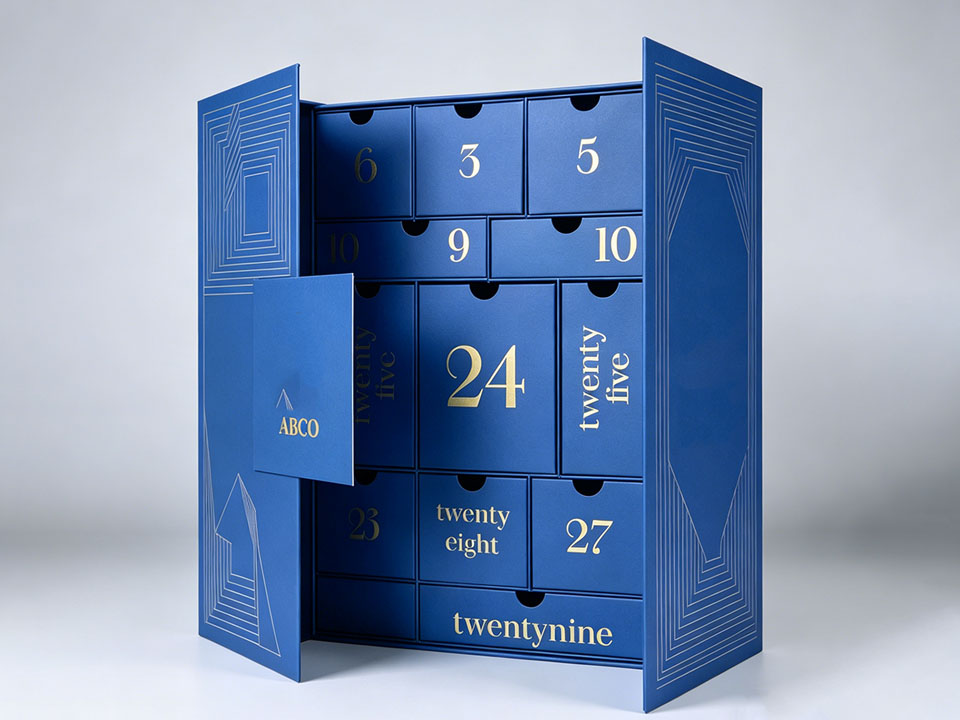
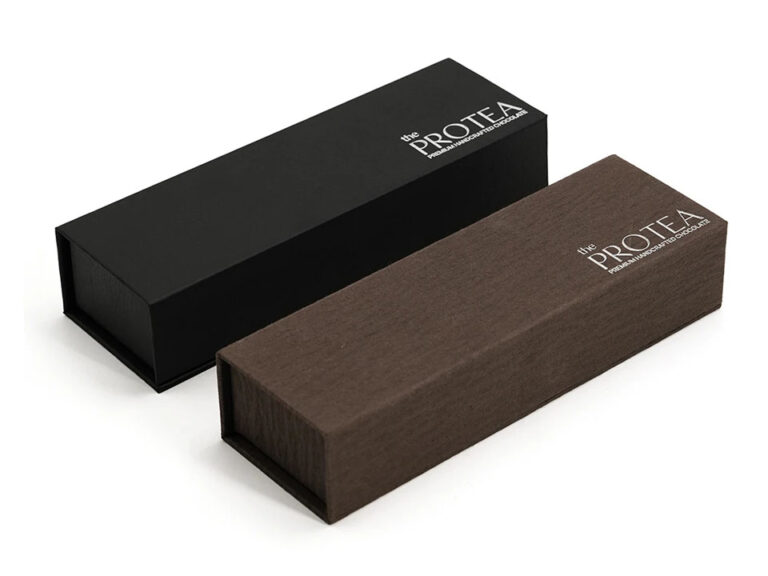
Custom promotional boxes are branded packaging developed specifically for marketing activities rather than routine transport alone. They are commonly used for product launches, promotional merchandise, media kits, influencer seeding, corporate gifting, exhibitions, loyalty programs, seasonal campaigns, dealer kits, samples, and event giveaways.
Customization can include:
A promotional box is therefore different from a standard shipping carton. It is designed around both the physical contents and the marketing experience surrounding them.
A PR box is a narrower type of promotional packaging usually aimed at journalists, creators, influencers, or selected media contacts. A promotional gift box may instead target employees, customers, distributors, event attendees, sales prospects, or loyalty-program members.
They support a campaign in four main ways: they make campaign branding tangible, control how products are revealed, organize multiple promotional items into one coherent presentation, and create space for measurable calls to action.
The distinction matters. Packaging should not simply display a logo. It should perform a defined campaign function.
Digital advertisements disappear when the impression ends. A physical package stays with the recipient while it is carried, opened, handled, photographed, stored, or reused.
Campaign assets can be carried across the exterior, inner lid, insert, cards, ribbons, labels, and other components. This gives brand managers more control over the transition from initial delivery to product reveal.
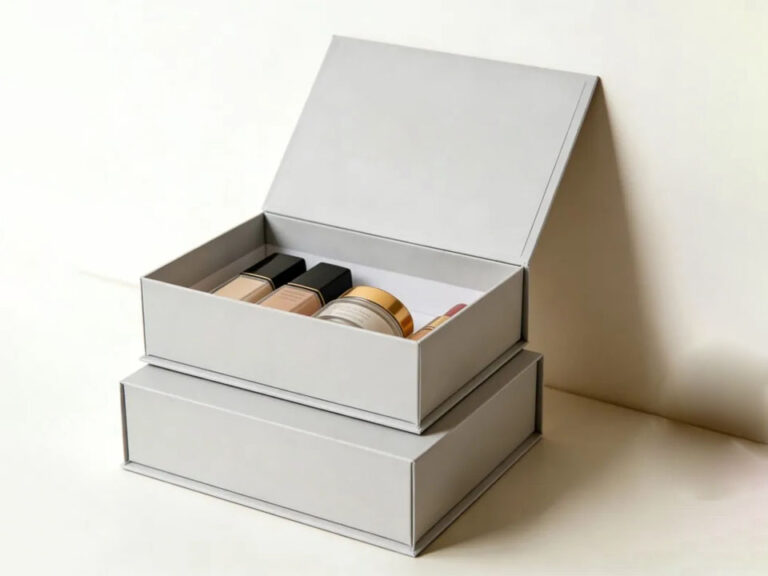
For example, an iridescent rigid photo-magnet gift box uses specialty surface material, interior branding space, a magnetic closure, and separated compartments. That format makes sense when visual presentation and the arrangement of several small campaign items matter more than lowest possible packaging cost.
The objective is consistency rather than decoration for its own sake. Logo scale, typography, campaign colors, artwork hierarchy, interior copy, and product arrangement should all follow the same creative system used in the broader campaign.
Opening sequence is particularly relevant for launches, PR programs, VIP gifting, and premium sample kits.
A hinged lid can expose a printed campaign message before the recipient sees the product. A drawer creates a slower reveal. A removable insert can organize several products according to priority. Interior printing can introduce the campaign concept without adding another brochure.
A highly distinctive format such as a foldable hexagon gift box with ribbon closure can work for selective gifting, seasonal launches, cosmetics, event favors, or campaigns where the packaging itself is intended to contribute to presentation.
The structure should still serve the campaign. A six-sided box that looks distinctive but creates excessive assembly labor or wastes freight volume may be a poor solution for a campaign involving 20,000 recipients.
This is one of the most important distinctions for campaign buyers.
A heavier board, more foil, a magnetic closure, and a complex insert can make packaging more expensive without necessarily improving campaign performance.
The right question is not:
“How premium can we make this box?”
It is:
“Which packaging features help this specific campaign achieve its objective?”
For a small executive-gifting program, a rigid box may support the desired perception. For a large influencer-seeding campaign, spending less per package may allow the brand to reach more relevant recipients. For an exhibition giveaway, fast packing and transportability may matter more than an elaborate opening sequence.
Recent promotional-products research reinforces the broader principle that recipient value matters more than ornamentation. PPAI’s 2025 U.S. consumer study reported that 54% of respondents still had the last promotional product they received and 61% clearly remembered the brand; usefulness was the most commonly cited reason for keeping branded merchandise. The research measures promotional products rather than boxes specifically, but it supports an important campaign-design principle: packaging and its contents should create recipient value, not simply visual excess.
The correct structure depends on audience value, distribution method, product fragility, quantity, campaign duration, and desired presentation.
| Campaign objective | Suitable packaging format | Main advantage | Main sourcing consideration |
|---|---|---|---|
| VIP or executive gifting | Rigid magnetic presentation box | Controlled premium presentation | Higher unit cost and shipping cube |
| PR or influencer seeding | Rigid box or printed corrugated mailer with insert | Strong product organization and content-ready reveal | Balance reach against cost per send |
| Event or seasonal gifting | Foldable rigid gift box | Premium appearance with reduced storage volume | Assembly time must be planned |
| High-volume promotional mailing | Printed corrugated mailer | Efficient protection and distribution | Right-size dimensions carefully |
| Professional demo or sample kit | Rigid presentation box with fitted insert | Secure organization of multiple components | Accurate insert tolerances |
| Retail promotion or subscription campaign | Printed mailer with interior graphics | Combines shipping and branded reveal | Transit scuffing and closure performance |
A professional or technical campaign may prioritize organization over decorative styling. A rigid dental presentation kit with a fitted foam insert, for example, illustrates how the insert can separate and present several components while the outer package provides branding.
That logic extends to electronics samples, sales demonstration kits, beauty launches, medical accessories, distributor packs, and product-development samples.
Not every promotion requires a rigid gift box.
Corrugated mailers can be more suitable when promotional kits are sent directly through parcel networks. They can provide structural protection, exterior branding, interior graphics, and a controlled opening experience without requiring a separate presentation box inside another shipper.
A printed promotional mailer with a tear-strip closure shows how interior graphics can remain hidden during transportation and become visible after opening.
This can be useful for:
product seeding, subscription promotions, customer appreciation kits, direct-to-recipient gifts, employee campaigns, and launch merchandise.
Buyers should still test whether the decorated mailer itself can survive the intended distribution environment. Surface scuffing, label placement, tape, weather exposure, and carrier handling can change how a highly printed box looks when it reaches the recipient.
Custom promotional packaging becomes more measurable when the package leads to a specific next step.
A printed QR code might direct recipients to:
GS1 explains that GS1 Digital Link can connect product identifiers to online information and allows linked digital content to be updated without changing the on-pack Digital Link URI. This approach can be useful when the physical package remains in inventory longer than an individual digital campaign.
For marketing measurement, use campaign-specific URLs, QR destinations, or tracking parameters rather than sending every printed package to the corporate homepage.
The call to action also needs enough context. A QR code with no explanation gives the recipient little reason to scan. “Scan for installation video,” “Access your event content,” or “Register your kit” communicates a specific benefit.
Start with the campaign brief, not with a box catalog.
Decide whether the box is primarily intended to:
generate awareness, encourage content creation, present product samples, support a sales conversation, reward customers, deliver an event kit, improve a premium gift experience, or trigger an online action.
Trying to make one package achieve every objective usually leads to excessive graphics and unnecessary components.
If a box contains five items, they should not automatically receive equal visual weight.
The hero product might occupy the central insert position. A supporting sample can sit beside it. Printed instructions can be placed inside the lid. A QR code can be positioned where it appears after the product is removed.
Fitted inserts are especially valuable when different items need to arrive aligned rather than loose inside the box.
Possible insert materials include paperboard partitions, molded pulp, corrugated fitments, EVA/EPE-type foams, or other engineered structures depending on product weight, fragility, presentation requirements, destination market, and sustainability objectives.
Packaging artwork must accommodate folds, cut lines, bleed, glue areas, closure hardware, insert openings, and variable print behavior across different substrates.
For multi-SKU campaigns, use a controlled artwork system rather than rebuilding every box independently. Lock down:
logo position, typography, primary colors, legal copy zones, barcode or QR areas, and version numbers.
Then change the campaign-specific elements within that system.
This becomes particularly important when regional campaigns, multiple languages, or different recipient tiers are produced simultaneously.
Finishes should support the visual hierarchy.
Foil stamping can emphasize a logo or campaign name. Embossing can add tactile distinction. Matte lamination can provide a restrained surface appearance. Spot effects can create contrast without covering the entire package.
Using every available finish rarely produces the strongest design.
A more commercially disciplined approach is to choose one primary visual feature and let the box structure, print, and material do the remaining work.
For example, a marble-pattern foldable promotional gift box relies on printed surface graphics, a collapsible rigid structure, and ribbon closure rather than numerous added decorative processes. That makes it relevant to seasonal gifting or event programs where presentation and storage efficiency both matter.
Unit price alone gives procurement teams an incomplete picture.
The main cost drivers typically include box dimensions, structure, board or corrugated specification, printed coverage, finishing processes, insert complexity, assembly requirements, order quantity, tooling, number of artwork versions, packing method, sampling requirements, and freight.
Large presentation boxes can become disproportionately expensive to distribute because parcel carriers may charge according to dimensional weight rather than scale weight alone.
FedEx, for example, explains that dimensional weight for applicable U.S., Puerto Rico, and international shipments is calculated from package length × width × height in inches divided by 139. FedEx also recommends right-sizing packaging to reduce unnecessary shipping volume.
For a promotional campaign, this means an additional inch added for aesthetics can affect thousands of shipments.
Always evaluate:
packaging cost + assembly + outer shipping carton + freight + handling + expected damage + campaign quantity
rather than selecting the lowest box unit price.
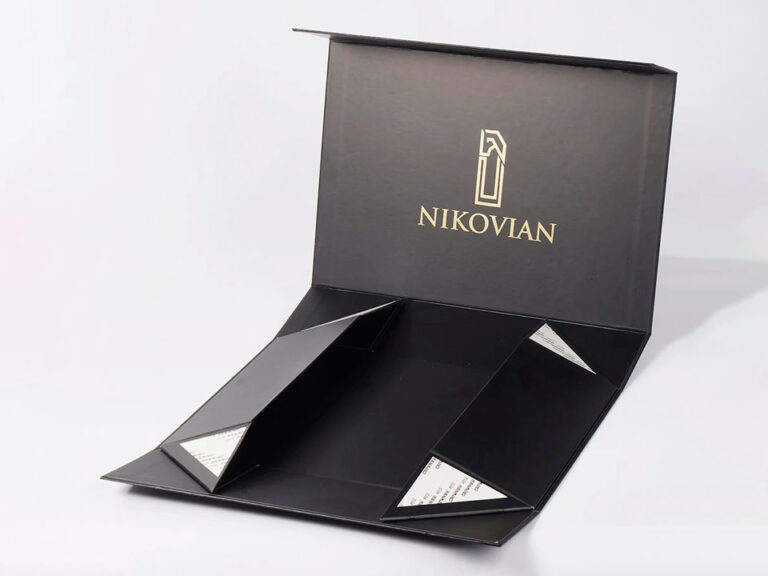
Foldable rigid structures are useful when buyers want a premium paperboard presentation but cannot efficiently ship or warehouse fully assembled rigid boxes.
They require assembly before filling, so procurement should compare cube savings with labor requirements.
Campaign operations teams should run an actual packing test rather than assuming the folded design automatically lowers total cost.
Minimum order quantity is often one of the earliest sourcing questions, particularly for test campaigns.
A 2026 small-business packaging discussion on Reddit provides a useful qualitative example. The buyer was hesitant to commit to a 500-unit custom mailer MOQ before knowing demand; responses discussed fixed printing and setup costs, digital short runs, and using stock boxes with customized stickers or inserts as alternatives. It is anecdotal rather than industry benchmark data, but it captures a real purchasing trade-off: lower commitment usually means a higher unit cost, while larger custom runs increase inventory risk.
For a campaign that has not yet been validated, procurement can consider:
a stock structure with custom print, digitally printed short runs, interchangeable printed sleeves or cards, or standardized boxes with campaign-specific inserts.
Once volumes become predictable, a fully customized structure may become more economical.
A 3D rendering can confirm graphic direction. It cannot fully confirm board feel, closure resistance, insert fit, color appearance, assembly speed, or the way products move during transport.
Before approving a meaningful campaign run, buyers should consider testing:
Checks dimensions, assembly, closure, product fit, and insert geometry.
Evaluates artwork position, overall color direction, text size, interior graphics, and opening sequence.
Represents the intended production materials, finishing, and construction as closely as practical before mass manufacturing.
The more expensive the campaign contents, the more important fit testing becomes. An inexpensive packaging change that prevents components from moving, scratching, or arriving out of sequence may provide more value than an additional decorative finish.
Promotional packaging can fail even when the box technically closes.
Typical QC checkpoints should include:
dimensions and tolerances, board specification, print registration, color consistency, surface scratches, foil position, lamination, glue quality, magnetic closure alignment, ribbon length, insert dimensions, product fit, assembly, and carton packing.
Buyers running repeat campaigns should retain an approved reference sample and controlled artwork revision.
If campaign colors are important, define the color target and acceptable approval method in advance. Saying “match our blue” is not an adequate production specification.
This is the practical decision rule.
Use a rigid presentation structure where recipient value and presentation justify it. Use a mailer where distribution efficiency is more important. Use a foldable rigid box where storage volume is a concern. Use fitted inserts where controlled product position actually improves presentation or protection.
Packaging should support the marketing strategy without consuming budget that could produce better returns elsewhere in the campaign.
The strongest promotional box is therefore not necessarily the most elaborate one. It is the structure that delivers the right products, to the right recipient, in the intended condition, with recognizable campaign branding and a clear next action.
A useful promotional-box RFQ should give the supplier enough information to quote the same project you actually intend to manufacture.
Include:
Ask suppliers to identify assumptions in their quotations. Two prices are not directly comparable if one includes a fitted insert, assembly, individual packing, and freight while another covers only the empty outer box.
That comparison discipline helps Brand Managers, Packaging Engineers, and Procurement teams evaluate promotional packaging on total campaign value rather than unit price alone.
Custom promotional boxes are used for product launches, PR kits, influencer seeding, corporate gifts, event giveaways, customer appreciation programs, sample kits, seasonal campaigns, promotional merchandise, and other brand-marketing activities.
Not automatically. Rigid boxes suit high-value presentation and smaller premium programs. Corrugated mailers generally suit campaigns that require direct parcel distribution, higher quantities, efficient packing, or lower packaging cost.
Add a campaign-specific QR code, landing-page URL, registration mechanism, referral code, or other trackable call to action. Avoid directing every campaign to an untracked corporate homepage.
Suppliers typically need box size, contents, quantity, structure, material, printing, finishes, insert requirements, artwork status, packing method, delivery destination, and deadline. Product dimensions are particularly important when custom inserts are required.
There is no universal best insert. Paperboard and corrugated inserts work well for many paper-based projects; molded pulp may suit certain sustainability or protection requirements; foam can provide precise positioning for delicate or high-value components.
Start sourcing early enough to complete structural development, artwork, sampling, production, QC, and freight before the campaign launch. Complex rigid structures, multiple finishes, custom inserts, or international shipping require more planning than simple printed mailers.
Right-size the box, standardize structures where practical, reduce unnecessary finishes, simplify inserts, consolidate artwork versions, consider flat-pack designs, and compare total landed cost rather than box price alone. For small test campaigns, digital printing or stock structures with branded components may reduce inventory risk.
Comments