Let Our Packaging Experts Review Your Project
Share your packaging requirements before you leave. Our experts can review your dieline, artwork, materials, inserts, finishing, certifications, MOQ, quality checks, and delivery expectations.

A premium wine box has to do more than make a bottle look expensive. For a professional buyer, custom wine boxes must balance bottle protection, presentation, manufacturing repeatability, packing efficiency, freight cost, and the requirements of the final distribution channel.
That distinction matters because a wine bottle is relatively heavy, fragile, and available in more profiles than the familiar “750 ml” description suggests. A package designed around appearance alone may allow bottle movement, strain the base, increase shipping volume, or require a separate transit pack that was never considered during the initial design.
The strongest custom wine packaging programs therefore start with the bottle, sales channel, and logistics route—not with foil color or surface finish. Premium presentation is the result of a correctly engineered packaging system, not a substitute for one.
Custom wine boxes are secondary packaging engineered around a specific bottle, brand, sales channel, and presentation requirement. Instead of adapting a standard carton to the product, the box dimensions, insert geometry, opening method, graphics, and materials are developed around the intended pack.
For a winery or beverage brand, this creates several practical advantages.
The bottle can be positioned consistently. Branding can be integrated into the structure rather than applied as an afterthought. An insert can support the base, body, shoulder, or neck where needed. The opening sequence can also be designed for retail gifting, corporate programs, collector releases, tasting sets, or promotional campaigns.
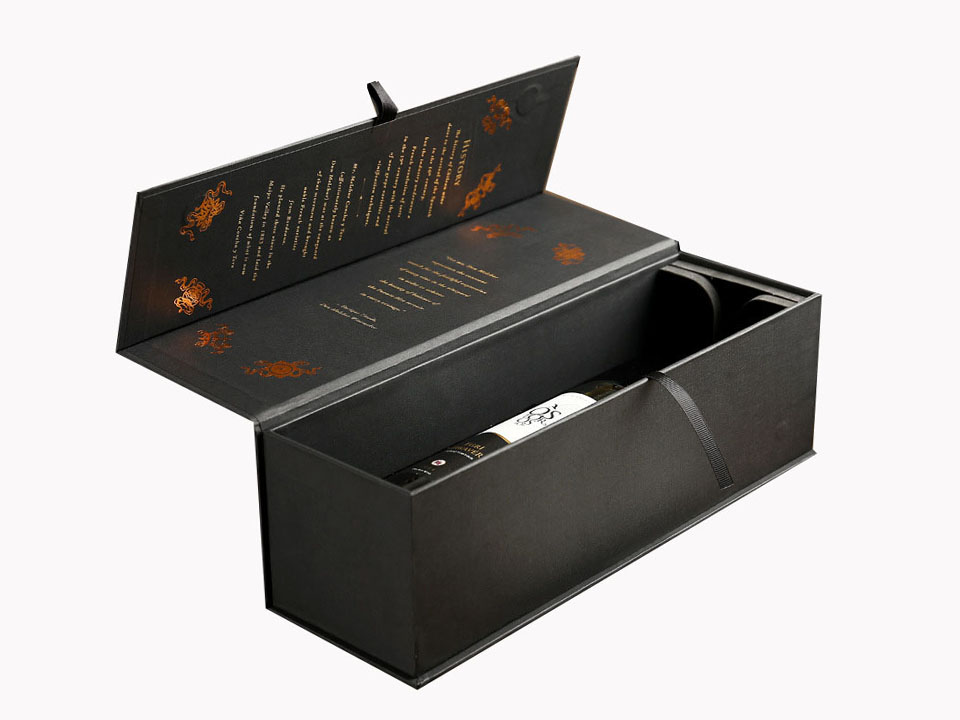
For example, a book-style wine gift box with gold foil branding uses a rigid hinged presentation structure, shaped bottle supports, and a large interior storytelling surface. That format addresses a different buyer requirement from a simple transportation carton.
The question is therefore not simply, “Do we need a box?” It is, “What jobs must this packaging perform between packing line and final recipient?”
Wine packaging influences what the recipient sees before the bottle itself becomes the focus. This is especially relevant to reserve wines, limited editions, corporate gifting, holiday programs, tasting-room sales, and gift-oriented retail.
A rigid package creates controlled geometry around the bottle. Large uninterrupted panels provide space for restrained typography, vintage information, origin stories, tasting notes, or brand imagery. Interior printing can continue that communication after the box is opened.
This does not mean every premium box needs multiple decorative processes. A clean wrapped rigid box with one well-executed foil mark can look more controlled than a package using foil, spot UV, embossing, texture, ribbons, and several printed colors at once.
Premium packaging is often more effective when structural quality is visible before decorative complexity is added.
Glass-to-board impact, bottle-to-bottle contact, excessive void space, and poor base support create obvious risks in beverage packaging.
The insert is therefore not an accessory. It is part of the structural design.
A magnetic gin tasting rigid box with a die-cut insert illustrates the same principle on smaller glass containers: each item has a defined position rather than being left loose within a decorative outer shell.
For full-size wine bottles, the engineering challenge becomes greater because the package must account for filled weight, bottle diameter, shoulder profile, closure height, and the forces transmitted through the base and insert.
A bottle sold from a winery gift shop, a bottle shipped individually by parcel, and a bottle included in a corporate gift program do not necessarily need the same packaging system.
Retail packaging may prioritize presentation, easy carrying, and shelf appearance.
Corporate gifting may require premium opening, branded inserts, greeting cards, and controlled presentation.
E-commerce adds distribution hazards, fulfillment speed, outer-carton performance, and carrier requirements.
This channel-specific approach prevents one of the most common specification mistakes: expecting one decorative box to perform every packaging function equally well.
This is one of the most important distinctions for a B2B buyer.
A premium rigid wine box may provide excellent presentation and some local protection, but that does not automatically make it a parcel-ready shipping container.
FedEx’s current alcohol packaging guidance recommends protective inner packaging such as polystyrene, molded pulp, or die-cut corrugated components together with a sturdy corrugated outer container. It also warns against packaging arrangements that allow bottles to touch. FedEx alcohol packaging guidance
That supports a useful design rule:
Treat the presentation pack and distribution pack as separate engineering functions unless the complete packaging system has been designed and validated to perform both.
A printed beverage mailer can demonstrate the structural logic of a transport-oriented format. For example, this corrugated printed beverage mailer box uses a fold-over corrugated structure rather than a wrapped luxury rigid-board construction. The format serves different operational priorities.
For wine programs involving parcel distribution, prototype the presentation box, inserts, cushioning, and outer shipper as one loaded system.
The International Safe Transit Association describes pre-shipment distribution testing as a tool for understanding packaged-product performance and matching test procedures to distribution hazards. ISTA packaging design and testing guidance
A box that feels strong on a conference-room table has not necessarily demonstrated resistance to repeated drops, vibration, compression, or orientation changes in distribution.
There is no single “premium” box structure. The right format depends on presentation level, packing workflow, distribution route, storage space, and budget.
| Structure | Best suited to | Main advantages | Buyer watch-outs |
|---|---|---|---|
| Book-style rigid box | Collector wine, luxury gifting, limited editions | Large branding area, controlled reveal, premium feel | Higher board and assembly cost; dimensional weight |
| Magnetic rigid box | Corporate gifts, reserve wine, premium retail | Clean opening, strong presentation, reusable feel | Magnets and multi-material construction can complicate sustainability goals |
| Folding rigid box | Premium programs with storage constraints | Luxury appearance with reduced inbound/storage volume | Requires reliable folding and assembly tolerances |
| Rigid window box | Tasting kits, bottle sets, display-oriented packs | Product visibility without opening | Window material adds another component and may affect recyclability |
| Corrugated mailer/shipper | E-commerce and distribution-led programs | Better structural efficiency and transport suitability | Usually less luxurious without additional print/finishing work |
| Two-piece rigid box | Gift sets and traditional premium presentations | Simple opening, strong visual symmetry | Deep boxes can be inefficient if the bottle or insert is poorly dimensioned |
A carrying requirement can also change the structure. A folding wine bottle gift box with integrated die-cut handles combines bottle presentation with a built-in carrying function. Its central holder is designed around one 750 ml bottle, while the outer panels provide branding space.
That type of format can make sense for winery retail, events, and gifting where the customer physically carries the bottle after purchase.
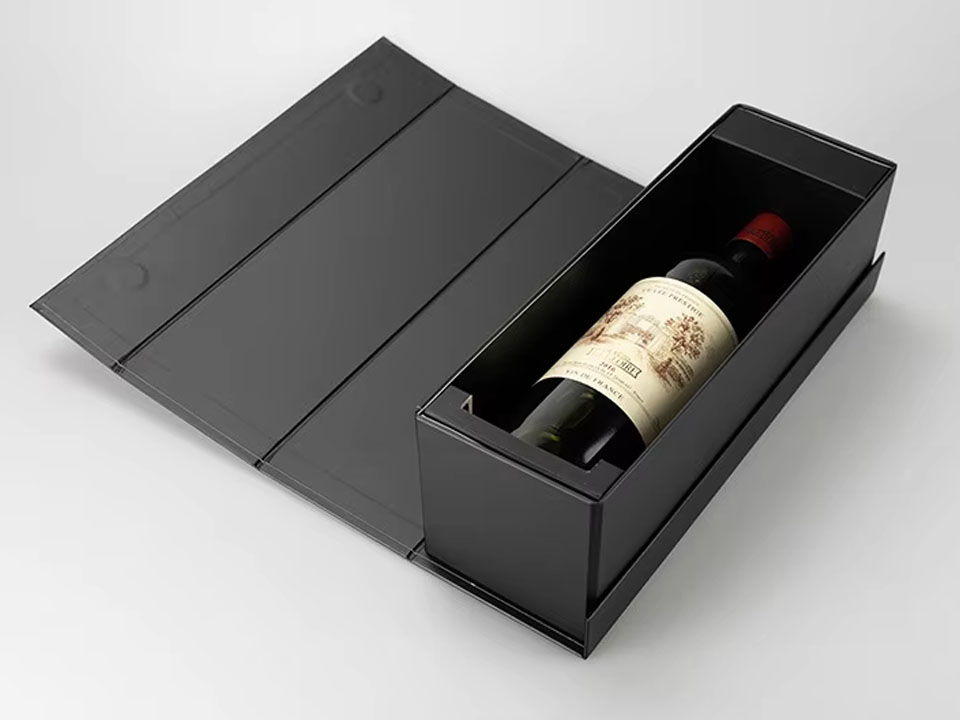
“Fits a 750 ml wine bottle” is not enough information for a production-ready RFQ.
Different bottles with the same nominal capacity can have different diameters, shoulders, bases, closure systems, and overall heights. Champagne-style bottles can also impose different structural demands from slimmer still-wine bottles.
Packaging engineers should ideally supply:
A physical production bottle is preferable during structural sampling when available.
For multi-bottle sets, the supplier also needs bottle spacing, accessory locations, and confirmation that glass surfaces cannot strike each other during expected handling.
A wine box insert should locate the bottle and manage movement without creating unnecessary pressure points.
Common options include paperboard cradles, folded corrugated structures, molded pulp, EVA or other foams, and hybrid structures.
Paper-based inserts can simplify material separation and suit brands prioritizing fiber-based packaging. Foam provides precise shaping and premium presentation but adds another material stream. Molded pulp can provide strong bottle location with a different visual character and tooling requirement.
The correct choice depends more on performance requirements than on which material appears most luxurious.
A windowed cocktail bottle presentation box shows how a molded insert can control the position of several small beverage bottles while the window provides product visibility.
The same design principle applies to wine: the bottle should stay where the designer intended it to be.
Rigid wine gift boxes typically combine a structural board with a printed or specialty-paper wrap. Folding cartons and corrugated formats use different paperboard constructions depending on required stiffness and distribution performance.
The specification should therefore separate structural material from surface appearance.
For example, “matte black box” describes almost nothing about structural performance. A useful specification identifies the board construction, wrap paper, insert material, dimensions, and surface finish separately.
Common finishing choices include:
Foil is effective when a logo, vintage, crest, or limited-edition mark needs controlled metallic contrast. Fine lines, registration requirements, foil area, and substrate texture should be evaluated during sampling.
These processes create tactile hierarchy without introducing another printed color. Deep relief, however, needs enough substrate support and can affect artwork tolerances.
These treatments change hand feel and resistance to scuffing, but buyers should confirm how the chosen surface behaves during packing, carton contact, transport, and repeated handling.
Windows make sense when seeing the actual bottle or set has merchandising value. They also introduce an additional material and bonding operation, so their benefit should justify the extra complexity.
The conventional assumption that “more finishes equal more premium packaging” is therefore misleading. Better premium packaging usually comes from disciplined hierarchy: accurate construction, controlled color, clean edges, appropriate board stiffness, and a small number of finishes executed consistently.
Unit price is influenced by more than board thickness.
The largest cost variables commonly include structure complexity, finished dimensions, board usage, insert construction, print method, number of finishing processes, tooling, assembly labor, order quantity, packing method, and freight volume.
A collapsible rigid structure may cost more to manufacture than a conventional rigid box but reduce storage or international freight volume. A simpler paperboard insert may be less expensive than precision-cut foam and easier to pack. Conversely, reducing material too aggressively can create quality failures or excessive movement.
This is why comparing suppliers only by unit price can produce the wrong decision.
Procurement should compare the total packaging system, including:
A lower-priced box that ships inefficiently or takes significantly longer to assemble can cost more at program level.
Capacity is not a structural dimension. Obtain the actual bottle drawing or sample.
Luxury paper wrap and rigid greyboard do not replace a correctly engineered distribution package.
The insert determines bottle location and can affect overall dimensions. Designing it after artwork is approved frequently creates avoidable revisions.
Renderings help evaluate proportion and graphics but cannot verify closure force, board stiffness, insert friction, bottle movement, foil quality, scuff resistance, or packing speed.
A structurally impressive box that requires several manual operations may become costly at thousands of units.
A wine-community discussion from 2024 described a shipment in which three of six bottles reportedly arrived broken. It is anecdotal rather than statistical evidence, but it illustrates the commercial consequence of packaging failure when expensive bottles are involved.
For a professional buyer, the relevant question is not whether breakage is common in an online discussion. It is whether the proposed packaging has been evaluated against your distribution system.
A box is not automatically sustainable because it uses kraft paper, recycled-looking graphics, or less plastic.
Material selection, total material weight, recyclability, number of bonded components, freight efficiency, sourcing documentation, and the actual market where the package will become waste all matter.
This issue is increasingly relevant for European programs. Regulation (EU) 2025/40 on packaging and packaging waste has applied from 12 August 2026. It introduces requirements around packaging design and recyclability, with detailed design-for-recycling and recyclability-performance provisions developing through the regulatory timetable. Regulation (EU) 2025/40 on packaging and packaging waste
For wine packaging intended for EU markets, sustainability should therefore be treated as a design input rather than marketing copy added after structural development.
Ask suppliers how materials can be separated, whether a window or magnet is really necessary, what documentation is available for paper sourcing, and whether the structure can achieve the required performance with fewer mixed materials.
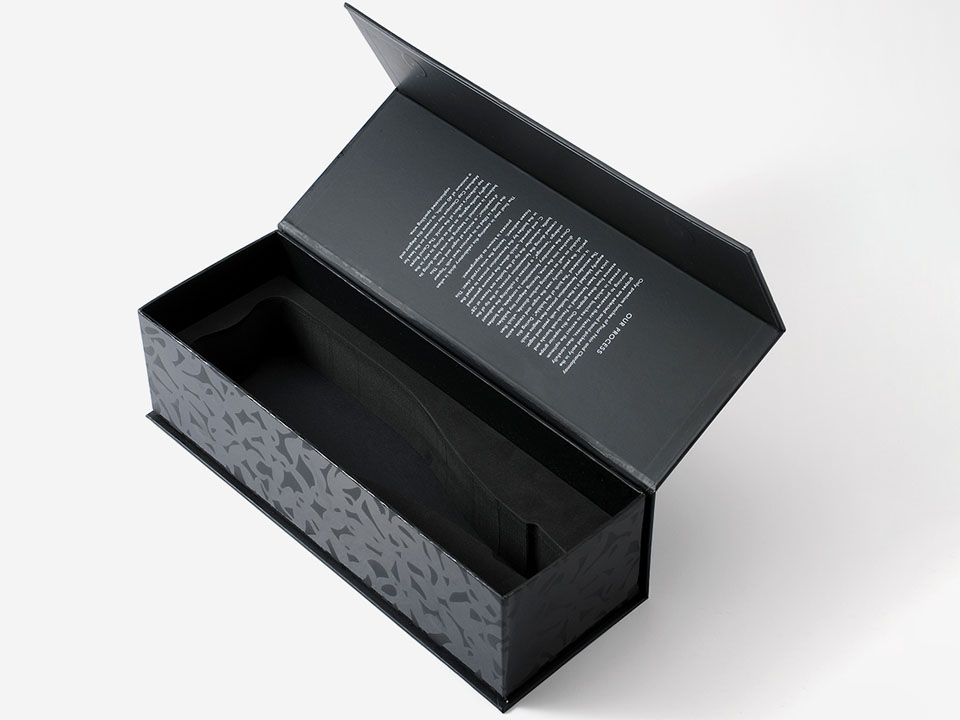
A capable supplier should be able to discuss the package at structural, manufacturing, and supply-chain level—not simply quote dimensions and printing.
Before awarding the project, evaluate whether the supplier can address:
Can the supplier work from bottle drawings or physical samples and develop the insert and box together?
Can you obtain a blank structural prototype before spending time finalizing decorative details?
How are dielines, bleed, foil areas, spot colors, emboss plates, and artwork versions managed?
Will approval rely on digital files, physical proofs, material swatches, Pantone targets, or an approved production sample?
Ask how dimensional variation, wrap alignment, closure fit, insert positioning, and finished appearance are controlled.
For large orders, define what will be checked rather than relying on the phrase “strict QC.” Relevant items may include dimensions, material, print color, foil registration, surface defects, box function, insert fit, and packing quantity.
Confirm whether boxes ship assembled or flat, how many units fit each export carton, gross carton weight, carton dimensions, pallet configuration, and expected shipping volume.
These details make supplier quotations much easier to compare on an equivalent basis.
A good RFQ reduces assumptions. At minimum, provide the supplier with the following information:
Where a project is still at concept stage, define the non-negotiable requirements first—bottle protection, target presentation level, distribution route, target quantity, and budget range—then allow the packaging engineer to propose an appropriate structure.
That approach usually produces a more useful quotation than beginning with “Please quote a luxury wine box for a 750 ml bottle.”
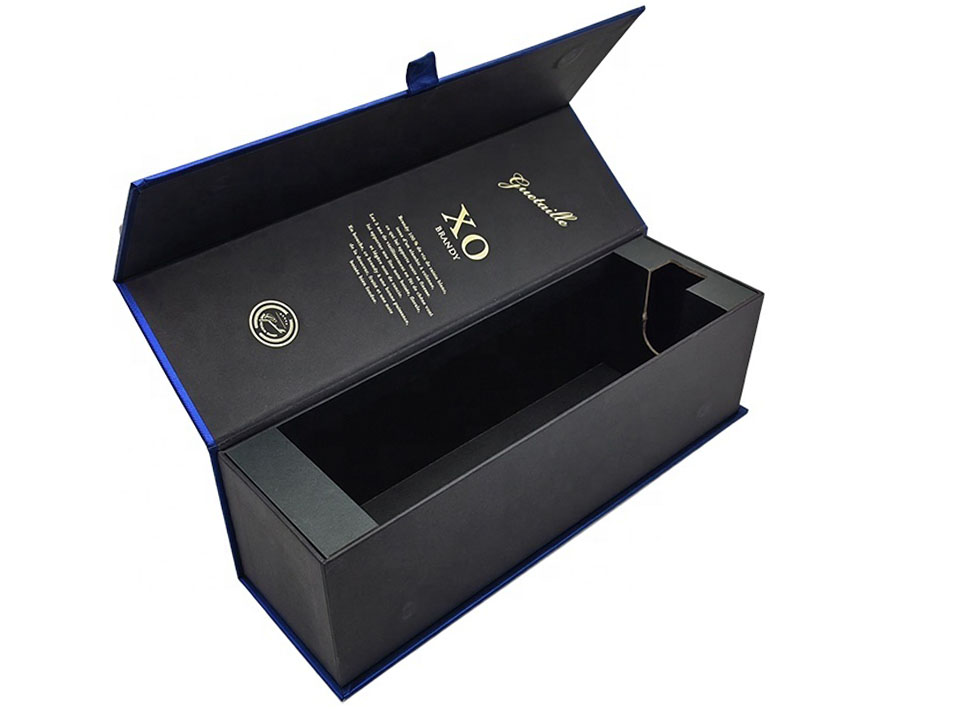
Rigid paperboard is common for premium gift presentation, while corrugated board is better suited to distribution-focused structures. The right choice depends on bottle weight, presentation level, insert design, shipping route, and whether the package is presentation-only or transport-ready.
For many premium wine projects, yes. An insert locates the bottle, controls movement, improves presentation, and can prevent contact between multiple bottles. Paperboard, corrugated, molded pulp, and foam are common options.
Not automatically. A rigid presentation box may still require cushioning and a sturdy corrugated outer shipper. Parcel distribution should be evaluated using the complete loaded packaging system rather than the decorative box alone.
Provide actual bottle height, maximum diameter, filled weight, shoulder and neck profile, closure dimensions, and relevant tolerances. For multi-bottle packs, also specify bottle spacing and accessory dimensions.
Quantity, dimensions, structure, board construction, insert material, printing, finishing, assembly method, tooling, packing format, destination, and delivery schedule all influence the quotation.
No. Magnetic closures can create a refined opening experience, but a well-made book-style, lift-off, folding rigid, or other structure may suit the product better. Structural accuracy and finish consistency matter more than the closure mechanism alone.
Use physical sampling where possible. Check bottle fit, insert retention, opening and closing, structural stiffness, artwork, color, foil or emboss registration, surface durability, pack-out procedure, and—where relevant—the complete transit packaging system.
Comments