Let Our Packaging Experts Review Your Project
Share your packaging requirements before you leave. Our experts can review your dieline, artwork, materials, inserts, finishing, certifications, MOQ, quality checks, and delivery expectations.

Magnetic boxes are typically used for premium retail products, gift sets, presentation kits, cosmetics and fragrance, jewelry, consumer electronics, apparel, corporate gifts, membership kits, and other products where packaging presentation matters almost as much as containment.
For a professional buyer, however, the more useful question is not simply what can go inside a magnetic box? It is whether the product value, insert requirements, distribution channel, order volume, and customer experience justify a rigid structure with concealed magnetic closure.
A well-specified magnetic box can combine product presentation, repeatable opening, fitted protection, and branding. A poorly specified one can add unnecessary material, freight volume, assembly cost, or closure problems without improving product protection.

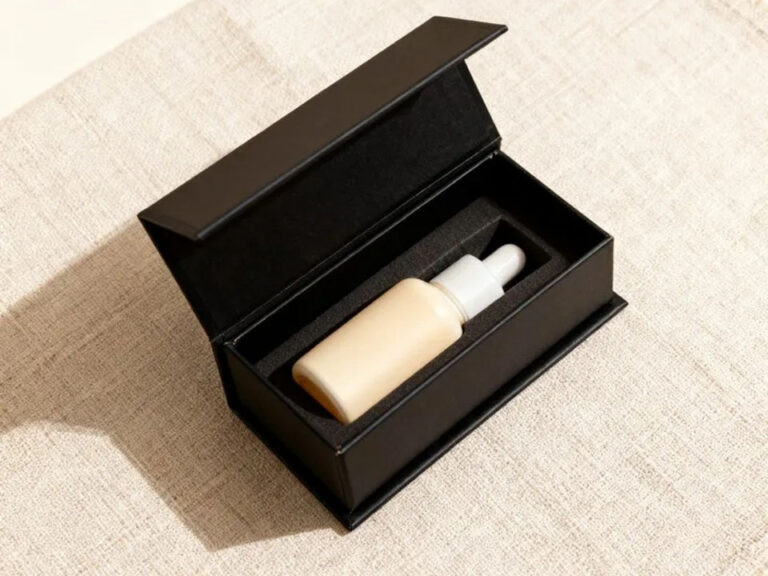
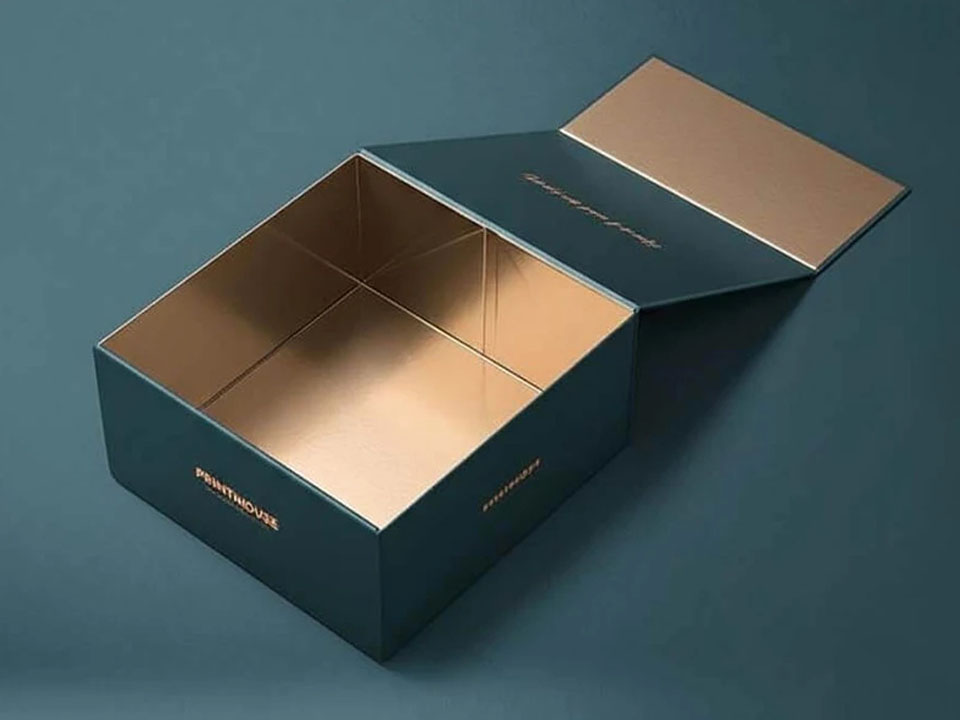
A magnetic box, usually called a magnetic closure box or magnetic rigid box, is a presentation package in which magnets are concealed within the closing flap and corresponding box wall. Most premium custom versions use rigid paperboard wrapped with printed or specialty paper, although collapsible versions are also available.
The magnet is only one component of the system. Box performance depends on the relationship between the rigid board, hinge, flap geometry, magnet position, wrap material, adhesive, and internal insert.
Buyers comparing available constructions can review a broader magnetic closure box product range to see how one closure format can be adapted across very different products and insert configurations.
Magnetic closure should not be confused with a security seal. It keeps the presentation box neatly closed, but it is not inherently tamper-evident and should not replace a required transit closure, regulatory seal, or protective shipping carton.
The strongest applications share several characteristics: relatively high product value, an important unboxing or presentation moment, a need for fitted internal organization, and a customer likely to retain or reopen the packaging.
| Application | Why magnetic boxes are used | Typical insert strategy | Main sourcing risk |
|---|---|---|---|
| Perfume and fragrance sets | Premium presentation and organized sample display | Precision-cut foam or paperboard tray | Vials moving, insert odor, oversized cavities |
| Cosmetics and skincare | Gift-set presentation and multiple-SKU organization | Paperboard, molded pulp, foam, or divider tray | Excess empty space and poor product retention |
| Jewelry and watches | Compact presentation with controlled opening | Foam, velvet-covered insert, card mount | Insert fit and surface scuffing |
| Electronics and wearables | Structured display of device and accessories | Precision-cut foam or engineered paper insert | Device movement and magnet-sensitive components |
| Corporate and promotional kits | Keeps multiple items together in a presentation format | Compartments or removable trays | High dimensional weight |
| Apparel and accessories | Premium gifting and reusable storage | Tissue, shallow tray, or no rigid insert | Large box size and freight volume |
| VIP cards and membership kits | Controlled reveal of cards, documents, and accessories | Die-cut paperboard card holder | Over-engineering a lightweight product |
| Keepsakes and personalized products | Compartmentalized presentation and storage | Divider insert | Complex manual packing |
Fragrance is one of the clearest applications because sample vials, miniature bottles, discovery sets, and promotional collections benefit from both orderly presentation and product retention.
A magnetic perfume discovery box with a fitted foam insert demonstrates the principle: the magnetic lid controls the opening experience, while the insert performs the more important physical job of holding multiple slim containers in position.
For a packaging engineer, cavity dimensions, bottle tolerances, finger-access areas, insert compression, and clearance above pump caps or atomizers deserve more attention than simply specifying a stronger magnet.
Small, high-value products are another good fit because the packaging can remain compact while creating a structured presentation.
Jewelry, watches, earbuds, smart rings, charging devices, accessories, and premium components can be separated from cables or documentation through custom cavities. The rigid magnetic smart ring box with foam insert is one example in which the insert secures a compact wearable while the hinged magnetic lid provides the presentation structure.
For electronics, suppliers should receive the actual product dimensions and preferably physical samples or reliable CAD data. A cavity based only on nominal dimensions can become too tight after wrapping, foam lamination, coating, or production tolerances are introduced.
Magnetic boxes are widely suited to launch kits, public-relations packages, sales samples, welcome kits, membership programs, gift cards, photo products, and branded merchandise.
These projects frequently contain more than one component, so internal organization can be more valuable than the magnetic closure itself. An iridescent magnetic gift box with a four-compartment divider illustrates how separate compartments can organize keepsakes, photo magnets, cards, charms, or promotional items.
Procurement teams should provide the supplier with the complete packout rather than dimensions for only the largest item. Missing cables, cards, booklets, samples, or accessories during prototyping is a common reason a visually successful sample fails during final packing.
Shirts, scarves, footwear accessories, baby products, fashion collections, and seasonal gift sets can also justify magnetic gift boxes.
Here the biggest question is often logistics rather than protection. Apparel is relatively lightweight, so a large set-up rigid box can create a poor ratio between product weight and shipment volume. A collapsible magnetic structure may therefore be commercially more appropriate than a permanently assembled rigid box.
A magnetic closure box is usually justified when the packaging must do more than contain the product.
It makes sense when the packaging is expected to support retail presentation, premium gifting, repeated opening, structured product display, influencer or press kits, long-term storage, or a high-value product launch.
The broader custom magnetic closure box design guide and solutions page shows applications extending from jewelry and cosmetics to promotional kits and branded retail packaging.
But premium does not automatically mean better.
For a low-margin commodity product, one-time e-commerce shipment, or extremely high-volume SKU, a folding carton or corrugated mailer may create a better total-cost structure. Adding rigid board and magnets merely because they feel expensive can increase packaging weight, cubic volume, labor, and freight without solving a real buyer requirement.
The right question is therefore:
What business function does the magnetic structure perform that a simpler box cannot perform economically?
If the answer is only “it looks more luxurious,” test whether the perceived-value improvement is worth the additional landed cost.
Magnetic boxes are not one standardized construction.
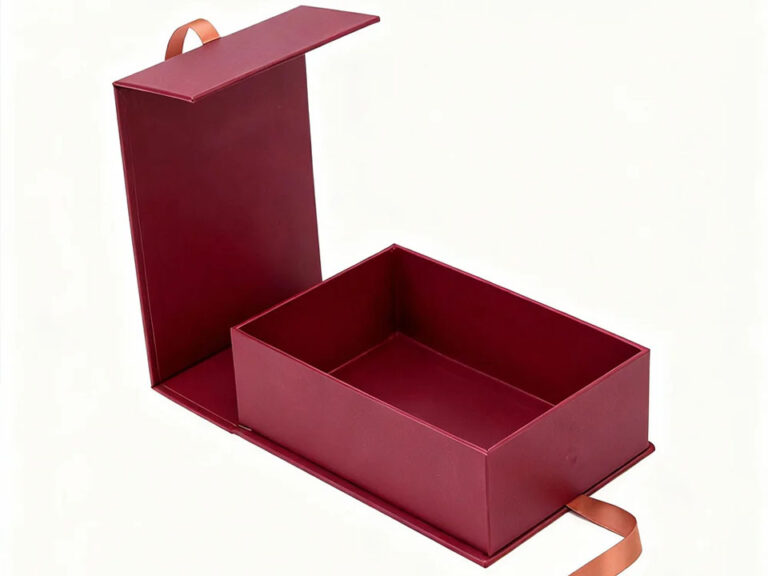
This is the classic rigid presentation box. The lid is permanently hinged to the base and closes over the front panel.
It gives excellent structural presence and clean presentation but occupies its full cubic volume from the time it leaves the packaging factory.
It is well suited to perfume, cosmetics, jewelry, electronics, and smaller premium gift sets.
A foldable or collapsible version is supplied flatter and assembled before packing. This can reduce storage and inbound freight volume, particularly for larger apparel or corporate gift boxes.
The trade-off is additional folding, adhesive-strip or corner-lock engineering and potentially more assembly at the packing location.
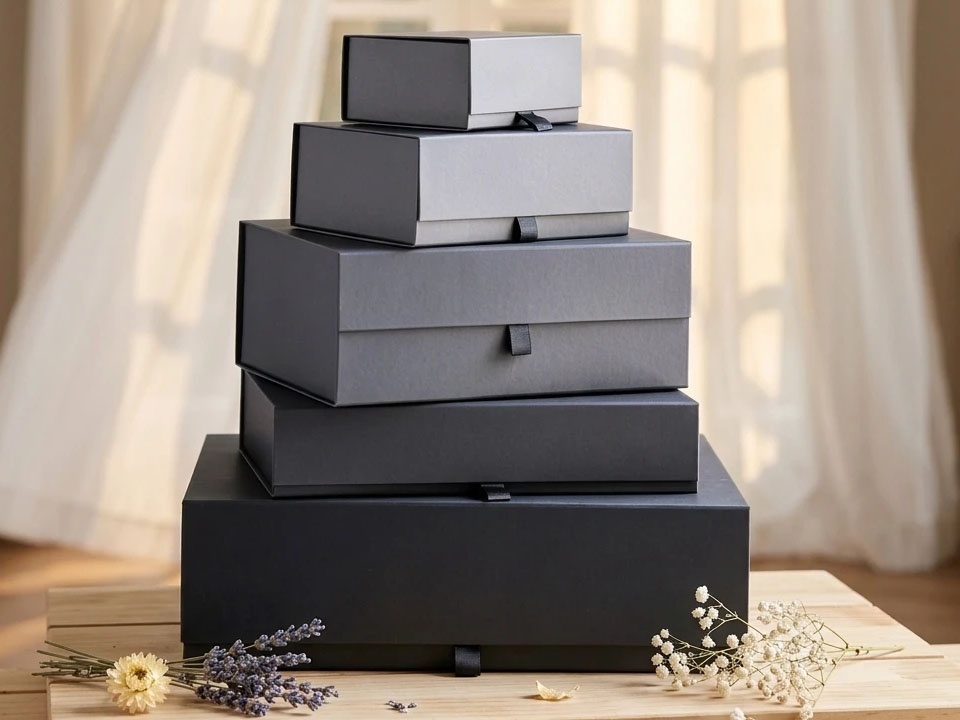
An internal shoulder can create a deeper reveal and improve lid alignment. It also adds material, assembly operations, and cost.
Do not specify one merely to make a box appear heavier. The additional structure should contribute to appearance, alignment, protection, or product positioning.
A frequent specification mistake is to focus on how strongly the lid snaps shut while treating the insert as secondary.
For fragile bottles, electronics, jewelry, or multiple-item gift sets, the insert controls product movement. If the product rattles inside the box, increasing magnet strength does nothing to solve the actual failure mode.
Common insert choices include paperboard platforms, folded dividers, molded fibre, EVA or other foams, and hybrid paper-and-foam assemblies.
The correct choice depends on product weight, fragility, cavity geometry, sustainability objectives, appearance, and packing method.
A stronger magnet is also not automatically a better magnet specification. Excessive closing force can make a small box unpleasant to open, while poor positioning can produce an inconsistent closure even when the magnets themselves are powerful. Alignment, board stiffness, hinge geometry, and repeatability should be evaluated together.
Two magnetic boxes with similar outside dimensions can have very different costs because the visible box size represents only part of the specification.
Important cost drivers include:
This is why lowest unit price should not be treated as lowest packaging cost.
A 2024 procurement discussion on Reddit described a buyer comparing widely different quotations for 400 magnetic apparel boxes sourced locally and overseas. The numbers are anecdotal and should not be treated as market benchmarks, but the discussion illustrates a recurring sourcing problem: suppliers may be quoting different manufacturing economics, specifications, logistics, and quantities even when the buyer believes the boxes are equivalent.
A usable comparison requires the same box dimensions, board construction, wrap, printing, finishes, inserts, quantity, packing method, freight basis, and delivery terms.
A magnetic presentation box should not automatically be treated as the transport package.
Rigid board protects presentation better than a lightweight folding carton, but finished surfaces, corners, hinges, and foil decoration can still be damaged in parcel distribution. Premium magnetic boxes are commonly packed inside protective corrugated shipping cartons when presentation quality must survive delivery.
For parcel-distribution programs, packaging teams can use transport testing appropriate to their channel. The International Safe Transit Association describes ISTA Procedure 3A as a general simulation test for individually packaged products up to 70 kg moving through parcel delivery systems by air or ground. Its test environment includes distribution hazards such as drops and vibration.
The objective is not merely to ask whether the box “feels strong.” Test the complete packed system: product, insert, magnetic presentation box, protective materials, and outer shipper.
Ordinary small magnetic closures should not automatically be classified as hazardous shipments. However, buyers using unusually large, numerous, or concentrated magnets should verify the magnetic field of the finished shipping package.
Under U.S. PHMSA rules, carriage by aircraft is prohibited for a package producing a magnetic field greater than 0.00525 gauss measured 4.5 m (15 ft) from any package surface.
For standard gift-box closures this may never become an operational issue, but it is a useful example of why packaging engineering should consider the completed shipment rather than evaluating an individual box component in isolation.
A rigid paperboard box should not be described as sustainable merely because most of its visible structure is paper.
Magnets, laminated films, adhesives, coatings, foam inserts, decorative layers, and mixed-material components all affect the final packaging system.
The EU Packaging and Packaging Waste Regulation, Regulation (EU) 2025/40, has applied from 12 August 2026. Article 10 requires manufacturers or importers, by 1 January 2030, to design packaging so that weight and volume are reduced to the minimum necessary for functionality. EU rules requiring packaging to be recyclable also phase in from 2030.
That creates a practical sourcing implication: unnecessarily thick walls, oversized cavities, decorative double structures, or excessive inserts deserve closer scrutiny even in premium packaging.
For fibre-based packaging, the 4evergreen alliance has developed a standardized Recyclability Evaluation Protocol covering different paper-recycling processes. The updated protocol was developed with input from more than 100 stakeholders across the fibre-based packaging value chain.
For buyers, the practical approach is to ask suppliers how the complete box—not only the greyboard—has been designed for material separation, recycling, or documented recyclability requirements in the target market.
Magnetic boxes are visually simple, but their manufacturing tolerances can be unforgiving.
A production sample should be checked for lid-to-base alignment, consistent magnet contact, hinge movement, squareness, corner wrapping, surface bubbling, exposed board edges, adhesive marks, foil or print registration, insert fit, scuff resistance, and product retention.
Open and close the sample repeatedly. Pack the actual product. Turn the packed box upside down where appropriate. Simulate normal handling. Check whether the insert lifts with the product and whether the lid remains flush after repeated use.
For larger orders, define approval standards before production rather than resolving subjective quality expectations after goods arrive.
Color references, approved material samples, artwork files, production tolerances, critical dimensions, finish standards, and acceptable cosmetic defects should be documented in the purchase specification.
Do not evaluate a supplier only by photographs of finished boxes.
Ask how the factory controls structural engineering, prototyping, greyboard cutting, wrapping, magnet positioning, insert conversion, printing, finishing, final inspection, and export packing.
A useful sample process usually progresses from structural confirmation to decorated prototype and then, where order value warrants it, a pre-production or production-standard sample.
For complex inserts, send the actual product or engineering data. For color-sensitive programs, identify Pantone references and establish how color will be approved. For repeat orders, ask how the supplier maintains board, paper, ink, finish, and insert consistency across production lots.
A supplier can quote more accurately when the RFQ defines the complete packaging system rather than asking only for “a luxury magnetic box.”
Include:
The objective is not to specify the heaviest board, strongest magnet, thickest foam, and most expensive finish. It is to design the minimum structure that reliably achieves the product-protection, presentation, compliance, and commercial objectives of the project.
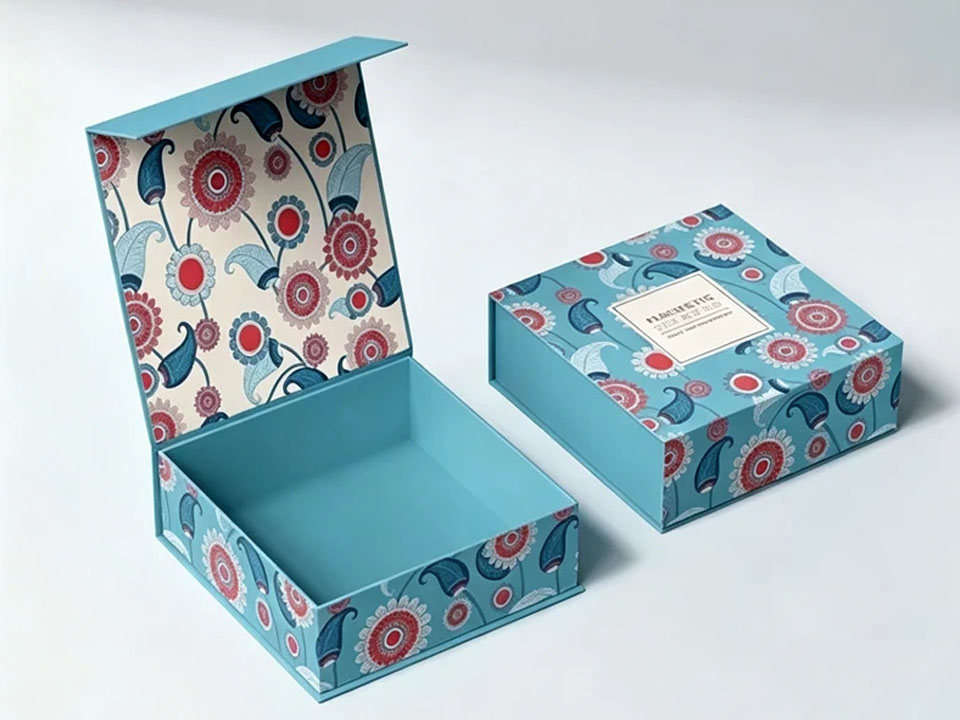
Magnetic boxes are best suited to premium products and organized sets such as perfume, cosmetics, jewelry, electronics, apparel gifts, promotional kits, membership packages, and corporate gifts where presentation and repeated opening add value.
Yes, but the magnetic closure itself does not protect fragile products. Protection depends primarily on the insert, product clearance, rigid structure, and outer shipping system. Fragile products should be tested in their complete packed configuration.
Normally, yes. Rigid board, wrapping, concealed magnets, manual assembly, inserts, and finishing add material and manufacturing operations. Their business case is strongest when premium presentation or reuse provides enough value to justify the additional landed cost.
Some can. Collapsible magnetic boxes are engineered to fold flatter for transport and storage. Traditional set-up rigid magnetic boxes retain their finished three-dimensional shape and therefore consume considerably more shipping and warehouse volume.
No. Inserts can use foam, folded paperboard, dividers, molded fibre, or other structures. The best insert depends on product weight, fragility, geometry, visual presentation, sustainability requirements, and packing process.
It depends on the complete construction and local recycling system. Paperboard content alone is not enough to determine recyclability because magnets, films, coatings, adhesives, foam, and other components can affect recovery and processing.
Provide box or product dimensions, product weight, quantity, artwork, finishes, insert requirements, destination, schedule, packing configuration, testing requirements, and sustainability requirements. Physical product samples or accurate CAD data are particularly useful for precision inserts.
Comments