Let Our Packaging Experts Review Your Project
Share your packaging requirements before you leave. Our experts can review your dieline, artwork, materials, inserts, finishing, certifications, MOQ, quality checks, and delivery expectations.

Magnetic closure gift boxes have become a default premium packaging format across cosmetics, electronics accessories, corporate gifting, and specialty retail. But “magnetic gift box design” covers a wide range of engineering decisions — magnet type and placement, board caliper, hinge construction, liner material, and closure tolerance — that determine whether a box performs reliably at scale or generates costly nonconformance after tooling is cut.
This guide is written for the people who actually specify and audit these boxes: procurement managers building RFQs, engineers reviewing structural drawings, QA managers writing inspection criteria, and operations managers managing lead time against launch dates. It focuses on manufacturability, sourcing risk, and total cost — not gift-wrapping aesthetics.
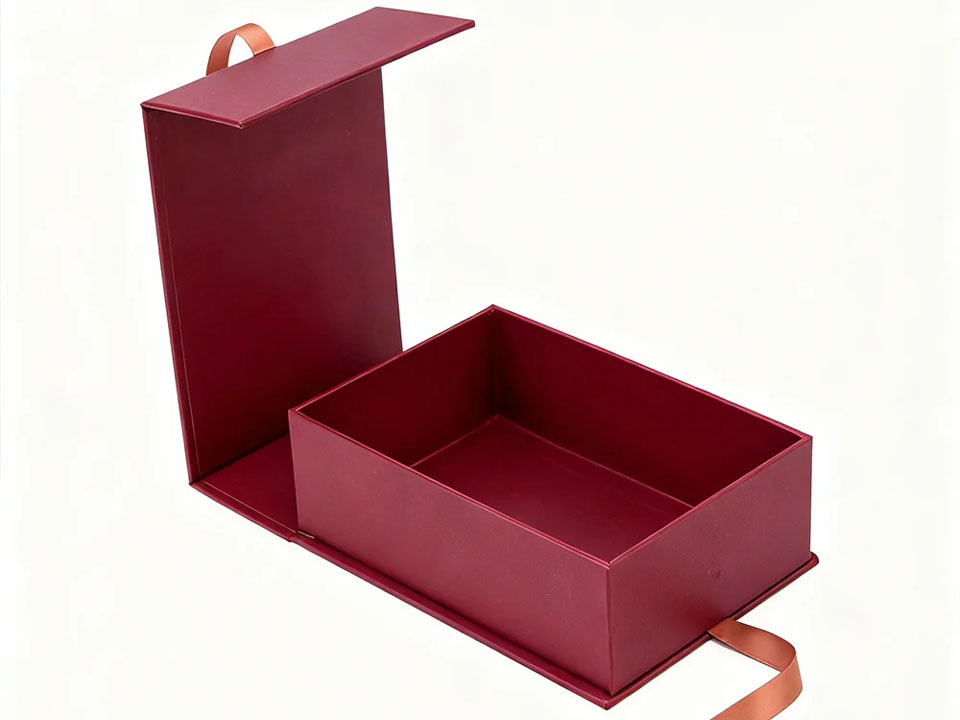
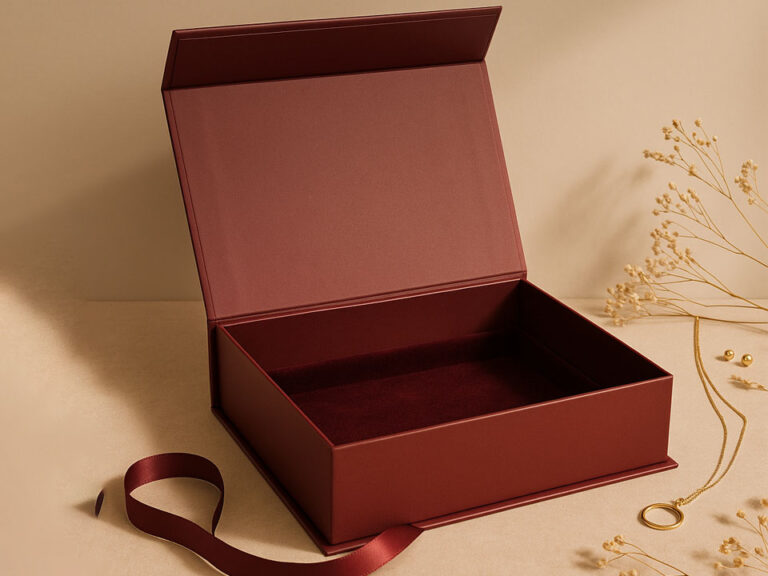
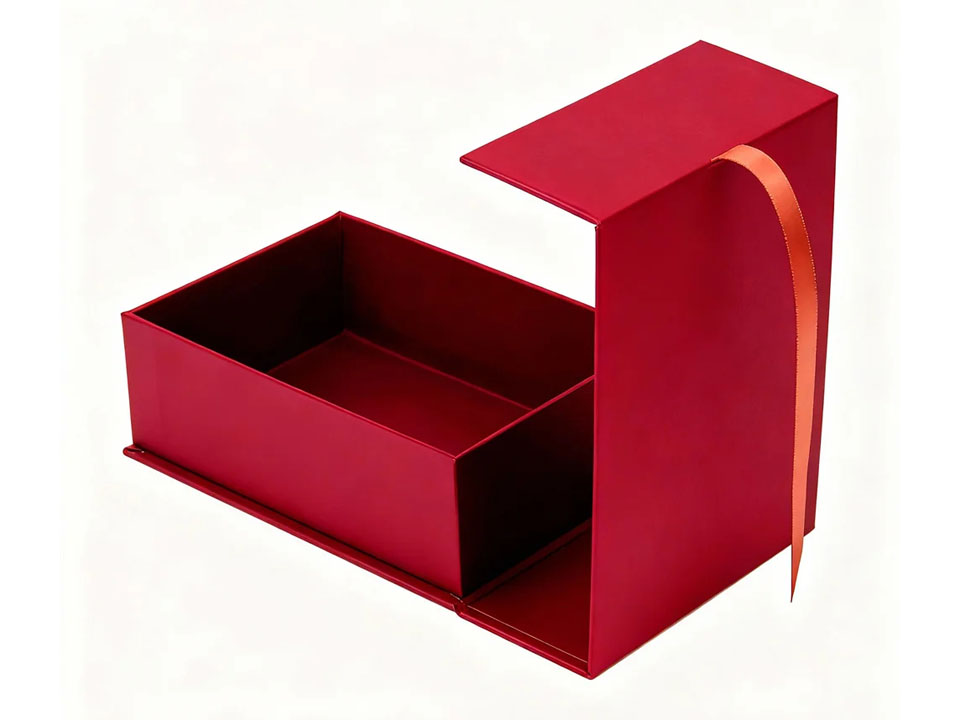
A magnetic gift box is fundamentally a rigid box (also called a set-up box) built on a non-collapsible chipboard or greyboard frame, wrapped in printed paper or specialty stock, with one or more magnets embedded in the lid and a corresponding magnet or steel plate embedded in the base or tray wall. The magnets create a closure force that holds the lid shut without tabs, ribbons, or friction-fit alone.
Three structural families dominate the category:
Buyers evaluating magnetic closure rigid box specifications should request a structural drawing, not just a rendering. The drawing should specify board caliper (typically 1.5mm–3mm greyboard for mid-weight gift boxes, heavier for boxes over 1kg fill weight), wrap material, magnet diameter and thickness, magnet housing method (recessed cavity vs. surface-mounted with adhesive), and the count and position of magnets relative to box width.
According to the GM Insights Rigid Boxes Market Report, the global rigid boxes market — the category that includes magnetic-closure gift boxes — was estimated at USD 31.2 billion in 2025 and is forecast to grow at a 4.6% CAGR through 2035, with lid-and-base/cap-and-tray constructions holding a 30.7% share specifically because of established tooling standards for high-volume premium packaging programs.
For sourcing managers, this matters practically: lid-and-base is the format most factories already have die sets, corner-wrapping jigs, and magnet-insertion fixtures tuned for. Choosing a book-style or heavily customized structural variant instead is not wrong, but it typically means new tooling, longer first-run calibration, and a higher risk of dimensional drift on early production lots. If your program has a tight timeline, ask suppliers directly whether your chosen structure uses their existing tooling library or requires new tooling — this single question affects both lead time and unit cost more than almost any other spec decision.
Magnet specification is where most avoidable defects originate, and it deserves more RFQ detail than it typically gets.
Magnet type. Neodymium disc magnets are standard for gift box closures because of their high pull force relative to size. Ferrite magnets are occasionally used on lower-cost programs but require a larger diameter to achieve comparable holding force, which can be a problem in tight lid profiles.
Magnet count and placement. Small boxes (under 15cm width) typically use a single magnet pair centered on the front lip. Wider boxes, or boxes carrying heavier contents, often use two magnets spaced near each front corner to prevent the lid from “bowing” open at the center under fill weight.
Pull force calibration. Pull force needs to be matched to the finished, filled weight of the box — not the empty box weight. Undersized magnets on a heavy box are a leading cause of lids popping open in transit or during handling on a retail shelf. Oversized magnets, on the other hand, can put excess stress on the hinge or wrap paper at the closure point over repeated open/close cycles, leading to premature scuffing or delamination at the magnet housing.
It’s worth noting explicitly: no formal ASTM or ISO standard currently governs magnet pull-force testing for gift box closures. Pull-force targets and test methods in this category are supplier-specific QA practice, developed and validated in-house rather than benchmarked against a published standard. That makes it the buyer’s responsibility — not an assumed industry baseline — to request the supplier’s internal pull-force test method and specification range in writing before approving tooling.
Polarity control during assembly. This is a quieter risk than pull force, but a more damaging one when it fails. Magnets are inserted as loose components during hand or semi-automated assembly, and if the orientation isn’t checked in-line, it’s possible for a magnet in the lid and its counterpart in the base to end up with mismatched polarity — so instead of attracting, they repel. The result is a “floating” or non-closing lid, and because assembly runs in batches, this defect doesn’t usually show up as one bad unit — it shows up across an entire production lot. Industry QA writeups on collapsible and rigid gift box sampling describe this exact failure mode as one that “can slip into mass production if nobody checks it,” precisely because it’s invisible on a visual inspection and only appears when someone actually closes the box.
Buyers evaluating a supplier’s structural capability for this closure type should review the magnetic closure rigid box specifications format directly against their fill weight, box dimensions, and expected number of open/close cycles before finalizing tooling.
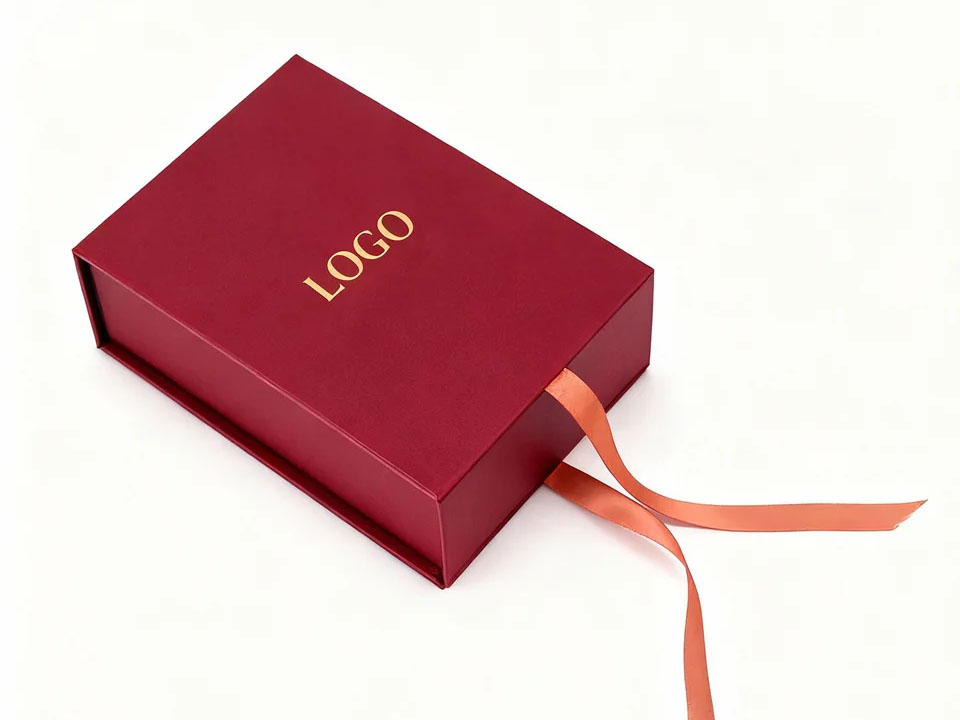
A pattern shows up repeatedly in packaging quality-control postmortems, and it’s worth naming directly because it’s almost entirely preventable.
A brand or procurement team approves a printed proof and a hand-sample of a magnetic gift box, treats that as final sign-off, and never runs a dedicated structural and magnet-functional test on a white — unprinted — sample pulled from the actual production tooling. The failure doesn’t surface at sampling. It surfaces after the full run ships, when receiving or a retail partner opens cartons and finds lids that won’t stay closed, or worse, lids that repel instead of close because of a polarity mismatch embedded across the batch.
A closely related and even more frequent issue is magnet strength that doesn’t match the box’s actual fill weight, or magnets positioned slightly off-center during assembly. Packaging engineers consistently flag both as leading causes of lids popping open in transit or looking unprofessional on shelf — weak magnets create security and damage risk, and misaligned magnets create a visibly uneven, unprofessional closure line.
Broader packaging-mistake postmortems from carton manufacturers point to the same root cause across categories, not just magnetic boxes: the costliest errors happen at the spec, artwork, or substrate stage — weeks before the press run — and only become visible after tooling is cut and production has already started. Skipping the white structural sample is repeatedly named as one of the recurring offenders in this failure pattern.
Stacked together, this describes a very consistent and avoidable sequence:
The fix is procedural, not expensive: require a white, unprinted, fully assembled sample from production tooling — not a hand sample or a pre-tooling prototype — and functionally test every magnet pair for both polarity and pull force before approving the printed proof for mass production. This should be a written gate in your PO terms, not a verbal request. Programs requiring documented gift box quality control inspection protocols should formalize this white-sample gate directly in supplier contracts, using the rigid magnetic payment card box with logo-printed insert as a reference point for the kind of precision-fit tolerance and print-registration checks a comparable functional inspection should cover.
FSC (Forest Stewardship Council) chain-of-custody certification is the most widely referenced sustainability credential in gift box sourcing, and for good reason: according to FSC US, 8 of 10 global consumers expect companies to ensure their wood or paper products don’t contribute to deforestation or habitat damage, and FSC chain-of-custody is the certification scheme most widely used among Fortune 500 companies. Procurement teams should confirm a supplier holds a valid, in-scope FSC chain-of-custody certificate covering the specific paperboard used in the box — not just a general company-level certificate that may not cover the product category being ordered.
But there’s a sourcing risk hiding inside how “FSC certified” gets used on RFQs and scorecards, and it’s worth stating plainly: FSC certification and PPWR recyclability compliance are not the same thing, and treating them as interchangeable leaves European-market buyers exposed.
FSC chain-of-custody certification verifies exactly one thing — that the wood-fiber input in the greyboard, wrap paper, or liner was sourced from responsibly managed forests through an unbroken custody chain. It says nothing about whether the finished magnetic gift box, once you’ve added foil stamping, plastic-film lamination, foam inserts, and adhesive-mounted magnets, is actually recyclable, compostable, or above the EU’s minimum recyclability grade. A box can be built entirely from FSC-certified board and still fail a recyclability audit because of a mixed-material closure system or heavy lamination that a recycling stream can’t separate.
The correct procurement practice treats FSC scope verification and design-for-recyclability substantiation as two separate, mandatory gates in the RFQ — not one checkbox standing in for both. Ask the supplier for the FSC certificate scope document covering your specific product, and ask separately for a design-for-recyclability assessment or material breakdown showing how the finished, decorated box performs against recyclability grading — because those are two different questions with two different answers. Finished premium products such as the FSC certified gift packaging example of a lavender rigid Mother’s Day gift box with satin lining illustrate why this distinction matters in practice: satin linings, foil accents, and premium paperboard can each carry different certification and recyclability profiles that need to be documented individually rather than assumed under a single certification claim.
For any program shipping into the EU, this distinction has a hard deadline attached to it. Under the EU Packaging and Packaging Waste Regulation (EU) 2025/40, which entered into force on February 11, 2025, all packaging placed on the EU market must be designed for material recycling. Starting January 1, 2030, packaging with a recyclability grade below 70% (below Grade C) will no longer be considered recyclable or legally permitted on the EU market.
For magnetic gift boxes specifically, this puts direct pressure on the closure system itself. Adhesive-mounted magnets, foam inserts, plastic window film, and heavy foil lamination are exactly the kind of mixed-material elements that can drag a box’s recyclability grade below the compliance threshold, regardless of how sustainable the underlying paperboard is. QA and compliance managers sourcing for European markets should request recyclability grade documentation now, ahead of the 2030 deadline, rather than treating it as a future problem — retooling a closure system after a program is already in market is far more expensive than specifying it correctly at the outset.
The table below summarizes the primary tradeoffs procurement and engineering teams weigh when specifying a magnetic gift box construction.
| Structural Format | Typical Tooling Availability | Magnet Configuration | Best Fit For | Key Risk to Manage |
|---|---|---|---|---|
| Lid-and-base (cap-and-tray) | High — standardized across most rigid box factories | 1–2 magnet pairs, front lip of lid vs. base wall | High-volume premium retail, cosmetics, electronics accessories | Magnet position drift on wide boxes without dual-magnet support |
| Book-style/flip-top | Moderate — hinge tooling adds a step | Magnet pair on front edge, opposite the hinge | Corporate gifting, presentation boxes, catalogs/media | Hinge wear over repeated open/close cycles |
| Custom-shape magnetic box (non-rectangular) | Low — often requires new die tooling | Varies; often requires custom-fabricated magnet housings | Brand-differentiated launches, limited editions | Longer first-run calibration and higher tooling cost |
| Magnetic outer sleeve over drawer box | Low — niche construction | Magnets mounted in sleeve, not the drawer itself | Heavier or bulkier contents needing extra security | Added material cost and more complex assembly QC |
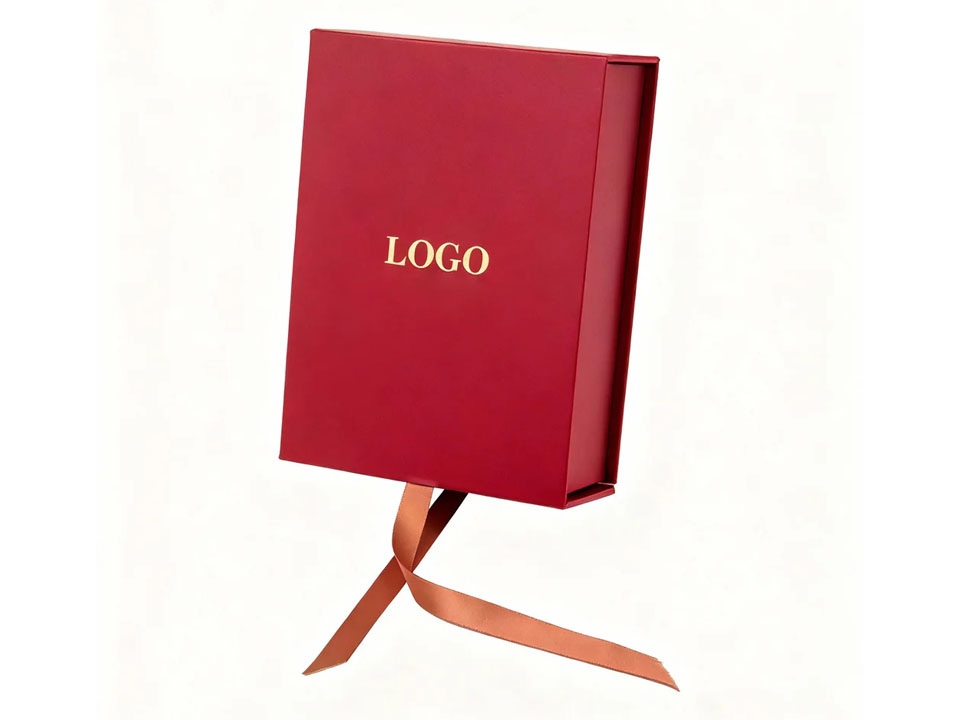
Lead time for custom magnetic gift boxes is driven less by printing and more by tooling and sampling cycles. A realistic planning sequence typically includes: structural die-line development and approval, a physical prototype (often unprinted or partially printed) for structural and magnet-function sign-off, a printed proof/pre-production sample, tooling cutting for mass production, and the production run itself.
Buyers evaluating custom rigid box lead time and MOQ should ask suppliers to break lead time down by phase rather than accept a single bundled number — a supplier quoting “6 weeks” without breaking out sampling versus mass production time makes it much harder to build in schedule buffer for a required re-sample if the first white sample fails functional testing. MOQs on magnetic boxes tend to run higher than on simpler folding cartons, largely because magnet sourcing and insertion tooling carry their own minimum efficient batch sizes — factor this into early budget conversations rather than discovering it at quoting stage. Custom-molded components add another layer to this calculation: a project like the magnetic incense holder gift box with round foam insert requires bespoke foam-insert tooling in addition to magnet-insertion tooling, and buyers should ask suppliers to quote lead time and MOQ for each tooling component separately rather than as one bundled figure.
When comparing suppliers for custom magnetic gift boxes manufacturer capability, request evidence of existing tooling for your chosen structural format, a documented magnet QC process (not just a verbal assurance), and references or case examples for programs at a similar fill weight and volume to yours. Suppliers positioned as OEM/ODM manufacturers serving US and EU export markets should also be able to speak specifically to PPWR-related design questions, not just general “eco-friendly” claims — a supplier that can’t discuss recyclability grading in concrete terms is a signal to probe further before committing tooling spend.
For teams evaluating manufacturing partners more broadly, reviewing a supplier’s catalog through the lens of rigid gift box manufacturer sourcing — looking specifically at structural variety and finished sample availability — gives a clearer picture of production maturity than a spec sheet alone.
A defensible QC program for magnetic gift boxes checks structure and function at three separate checkpoints, not just at final inspection.
Pre-production (white sample stage): Confirm board caliper against spec, check corner and hinge construction for gaps, and functionally test every magnet pair for correct polarity and pull force against the target range for the box’s filled weight — not its empty weight.
Pre-shipment inspection (printed, packed samples pulled from the actual production lot): Verify print registration and color match against the approved proof, re-confirm magnet function on a statistically meaningful sample size pulled across different points in the production run (not just the first boxes off the line), and check box-to-box dimensional consistency, since minor board or die drift can shift magnet alignment over a long run.
Post-shipment/receiving QC: Spot-check a sample from each carton lot on arrival before the boxes go into fulfillment or retail distribution, particularly for magnet function, since transit vibration and humidity changes can occasionally reveal adhesive-mounting weaknesses that weren’t apparent at the factory.
This three-stage approach is the practical answer to gift box quality control inspection requirements for programs where a batch-wide defect — like the polarity mismatch failure mode described earlier — would otherwise only be caught after the product is already in a customer’s hands.
Before issuing an RFQ for a magnetic gift box program, procurement and engineering teams should have clear, documented answers to:
What is the standard magnet type used in magnetic gift boxes?
Neodymium disc magnets are the standard choice due to their high pull force relative to size. Ferrite magnets are sometimes used on lower-cost programs but need a larger diameter for comparable holding strength, which can be a problem in slim lid profiles.
How do I prevent magnet polarity defects in a production run?
Require functional testing — not just visual inspection — on a white sample from actual production tooling before approving mass production. Polarity mismatches are invisible until the box is physically closed, so a printed hand-sample approval alone won’t catch them.
Is FSC certification enough to meet EU packaging sustainability requirements?
No. FSC certifies wood-fiber sourcing only; it says nothing about the finished box’s recyclability under EU PPWR. A box can be fully FSC-certified and still fail the 2030 recyclability grade threshold due to mixed-material closures or lamination.
What construction format should I choose for a high-volume magnetic gift box program?
Lid-and-base (cap-and-tray) construction is generally the best fit for high-volume programs, since it holds the largest market share due to standardized, widely available tooling, which typically shortens lead time and reduces first-run calibration risk.
How much lead time should I budget for a custom magnetic gift box program?
Lead time depends heavily on whether new tooling is required and how many sampling rounds are needed. Ask suppliers for a phase-by-phase breakdown covering die development, sampling, and mass production rather than a single bundled estimate.
What should a pre-shipment inspection for magnetic gift boxes include?
It should verify print registration, dimensional consistency, and functional magnet testing (polarity and pull force) on samples pulled across different points in the production run — not just the first units off the line — to catch batch-wide drift.
Comments