Let Our Packaging Experts Review Your Project
Share your packaging requirements before you leave. Our experts can review your dieline, artwork, materials, inserts, finishing, certifications, MOQ, quality checks, and delivery expectations.

Custom mailer boxes can do more than make an ecommerce shipment look better. When they are engineered around the product and distribution route, they can reduce unused shipping volume, control product movement, simplify pack-out, standardize presentation, and provide printable space for brand communication.
For professional packaging buyers, the strongest business case is therefore not simply “better unboxing.” It is the ability to combine transport packaging, product presentation, dimensional efficiency, and branding in one format.
That benefit is not automatic. An oversized mailer with excessive finishing, weak inserts, or the wrong corrugated grade can cost more and perform worse than a plain shipping carton. The real advantage comes from specifying the structure correctly.
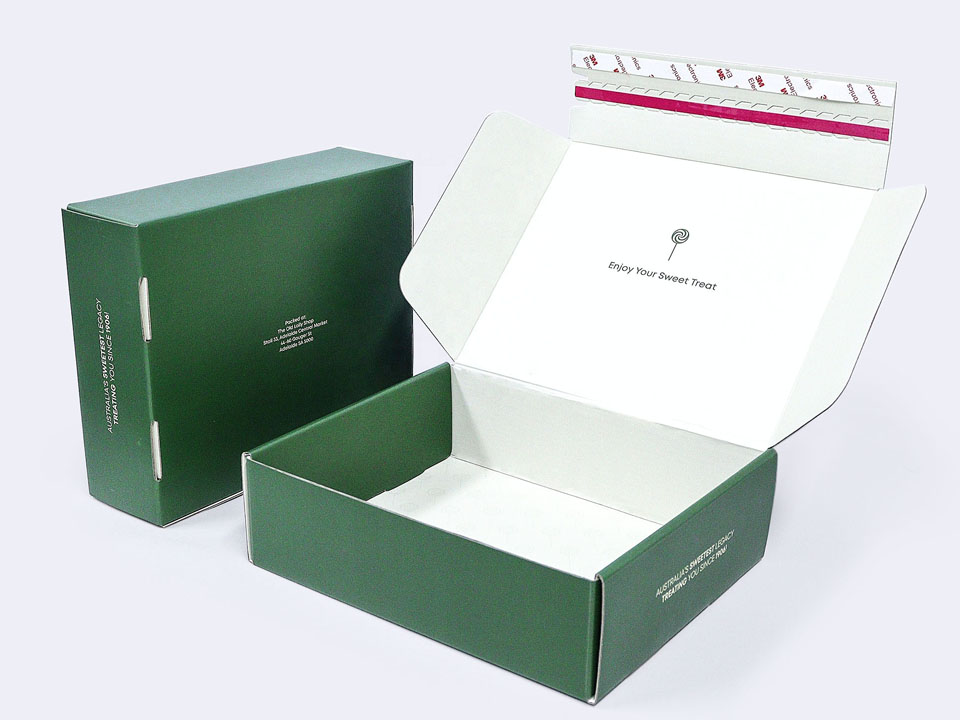
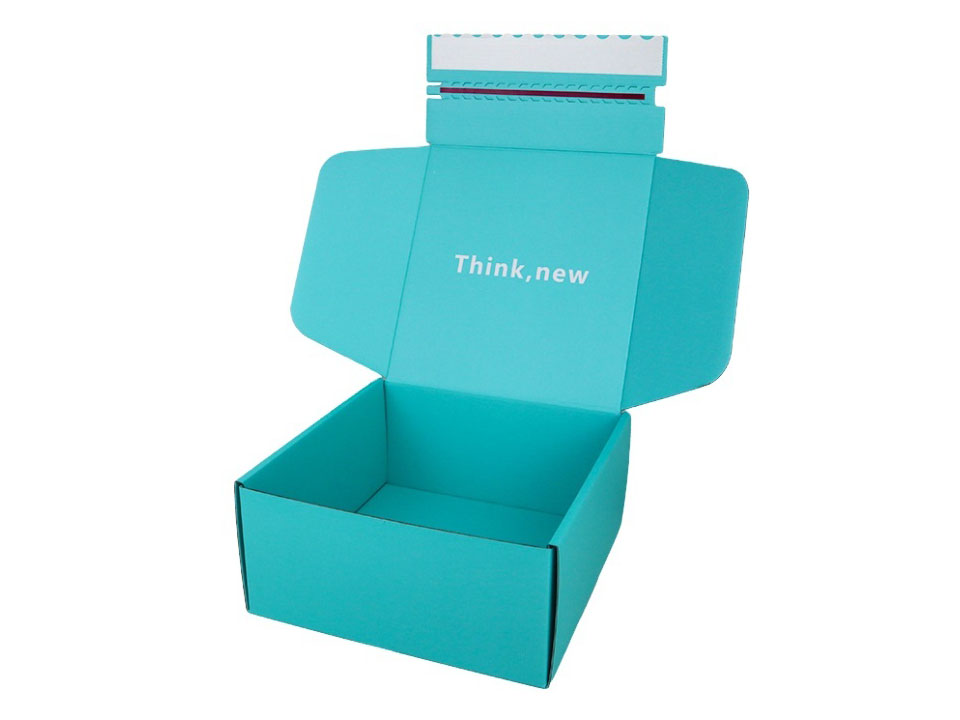
A custom mailer box is typically a die-cut paperboard or corrugated package made to specified dimensions. Corrugated versions commonly use a hinged lid, side flaps or dust flaps, and a front-tuck or roll-end closure.
Unlike a generic stock shipping carton, the box can be engineered around the dimensions, weight, fragility, and presentation requirements of a particular SKU or product family. Exterior and interior surfaces can also carry printed graphics, instructions, campaign messaging, QR codes, or other brand content.
Common applications include:
Corrugated mailers can often function as the transport package itself, while lighter paperboard mailers may require additional protection depending on product weight and the shipping environment.
One of the most commercially important benefits of custom mailer boxes is frequently overlooked: cube efficiency.
Parcel carriers may calculate shipping charges using dimensional weight rather than physical weight when a package occupies disproportionately large space. According to FedEx’s dimensional-weight guidance, dimensional weight for U.S. shipments is calculated using package length × width × height divided by 139, with billing based on dimensional or actual weight as applicable.
Consider a simplified example.
A generic 16 × 12 × 6 in. carton has a raw dimensional-weight calculation of approximately:
1,152 ÷ 139 = 8.3 lb
A better-fitted 14 × 10 × 4 in. custom mailer calculates to approximately:
560 ÷ 139 = 4.0 lb
Carrier rounding, service rules, contracts, and actual product weight still determine the final charge, but the example demonstrates why reducing unused cube can matter.
This is why a procurement comparison should not stop at:
Cost per box
It should consider:
Packaging cost + packing materials + labor + storage + outbound freight + expected damage cost
A custom box that costs slightly more per unit can still reduce total landed packaging cost.
Corrugated board provides the outer structure, but protection depends heavily on what happens inside the box.
A poorly fitted product can move, rotate, collide with other items, or concentrate impact loads against the box wall. Custom sizing reduces movement, while inserts can locate products in defined positions.
For example, a CBD wellness spray mailer box with a tray insert uses a folding insert to organize bottles within a roll-end mailer structure. This type of approach is particularly relevant when several small containers must remain separated and correctly oriented during handling.
Insert design should match the risk.
Paperboard or corrugated inserts may be sufficient for lightweight products that mainly need positioning. Foam can provide greater cushioning or surface protection for delicate components. A pink eyelash organizer mailer box with a foam insert illustrates how the outer corrugated mailer and internal cushioning can perform different functions.
For higher-value small products, buyers sometimes use a nested system. A jewelry mailer package with a foam insert and inner rigid box combines shipment protection with a more formal presentation package inside.
The engineering principle is simple: the mailer, insert, and product should be evaluated as one packaged-product system.
Standard cartons are normally selected from a limited size inventory. That frequently creates excess space around the product, which then has to be filled with paper, air cushions, foam, or other dunnage.
A custom dieline can reduce that void.
Less empty space can mean:
There is a limit, however. Removing all clearance is not good engineering. Fragile products still need appropriate cushioning space, and production tolerances must be considered so that boxes and inserts do not become too tight during mass production.
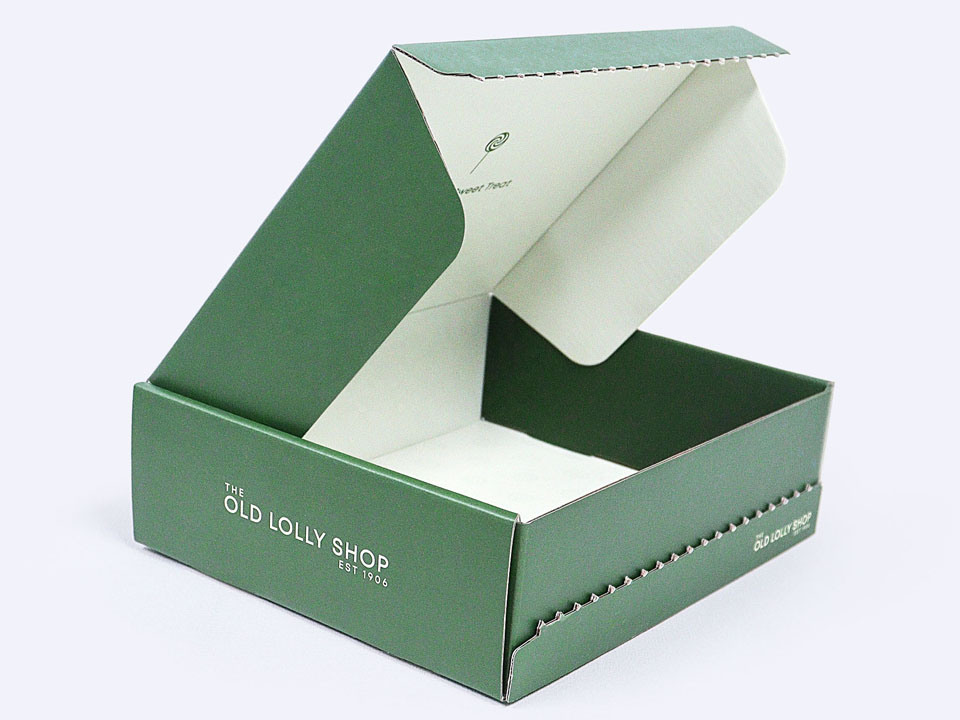
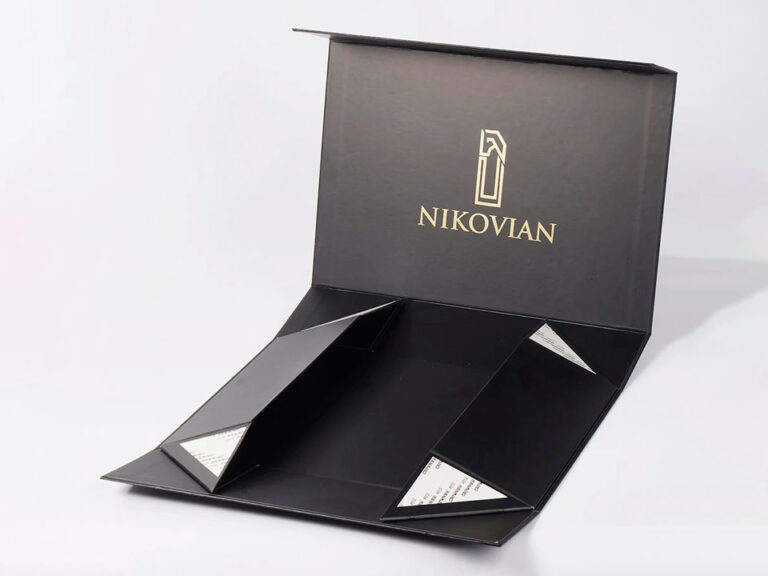
Most folding corrugated mailers arrive flat before erection.
For warehouses and 3PL operations, that can reduce storage volume compared with pre-assembled presentation packaging. It can also simplify replenishment to packing stations.
The operational benefit depends on the structure. A complicated mailer with several locking tabs may look impressive in a design rendering but slow operators during peak fulfillment.
Before approving a structure, time a realistic pack-out sequence:
At meaningful order volumes, even a small labor difference per shipment can outweigh savings achieved by negotiating a few cents off the box price.
A mailer is often the first physical brand asset an ecommerce customer handles.
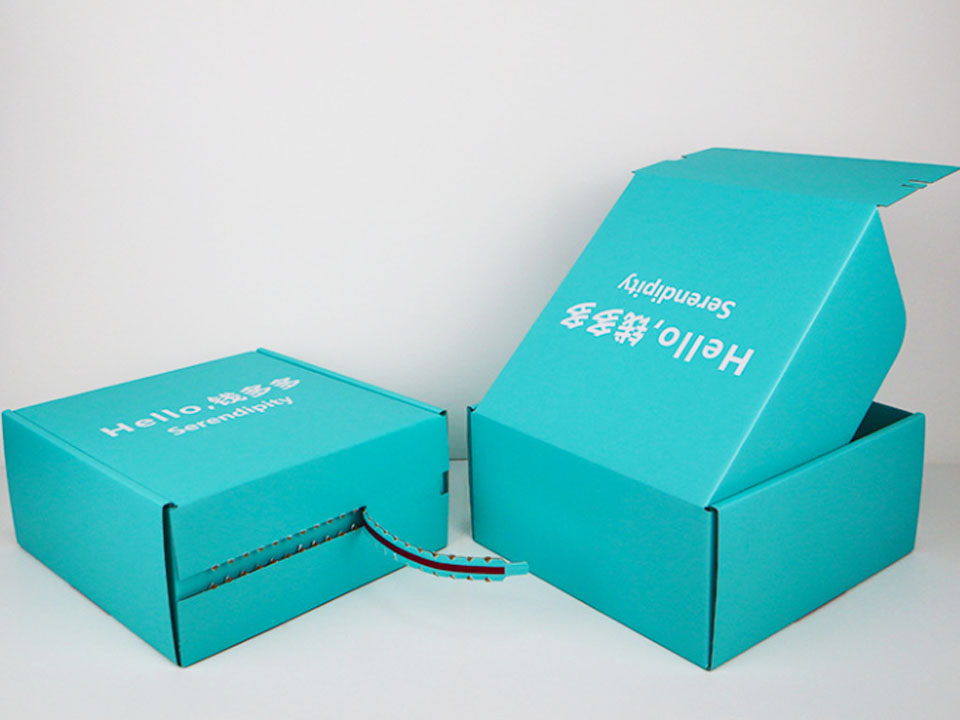
Exterior printing can establish recognition at delivery, while interior printing can carry messaging that appears only after the package opens. This is useful for instructions, cross-sell messaging, campaign artwork, product stories, QR codes, or subscription themes.
A black glossy corrugated mailer for retail kit packaging demonstrates how exterior graphics and interior messaging can be combined within the same corrugated structure.
That does not mean every surface should be printed. Heavy ink coverage, interior printing, laminations, foil, spot UV, and specialty processes all add cost or production steps.
Brand managers should ask a more useful question:
Which surfaces actually influence the customer’s experience?
For many projects, disciplined graphics on the exterior plus a strong interior-lid message will produce a better cost-to-impact ratio than decorating every panel.
Rigid gift boxes have clear advantages in luxury presentation, but they are heavier, occupy more storage volume, and often require an outer shipping package.
A well-designed corrugated mailer can occupy a useful middle ground between a plain shipper and a rigid presentation box.
For example, an apparel mailer box with gold foil branding combines foldable corrugated construction with a premium decorative finish.
This can make sense for fashion launches, promotional kits, subscription programs, and DTC brands where presentation matters but shipping efficiency remains a priority.
The more premium finish is not necessarily the better specification. Structural fit, print consistency, clean die cutting, fold accuracy, and arrival condition usually matter more than adding multiple decorative processes.
| Packaging format | Best suited to | Branding potential | Shipping efficiency | Protection approach | Main purchasing risk |
|---|---|---|---|---|---|
| Custom corrugated mailer | Ecommerce, subscriptions, kits, accessories | High; interior and exterior printing | High when correctly sized | Corrugated structure plus optional insert | Overspecifying print/finishes while underspecifying structure |
| Stock RSC shipping carton | General transport and multi-SKU fulfillment | Usually low | Variable; often oversized | Void fill and cushioning added during packing | Paying to ship unused volume |
| Folding carton + outer shipper | Retail products that also require parcel shipping | High on primary carton | Moderate to low because two packages are used | Retail carton inside transport carton | Added material and pack-out steps |
| Rigid gift box + outer shipper | Luxury, gifting, premium presentation | Very high | Usually lower | Rigid presentation box protected by shipping carton | Higher packaging, storage, and freight costs |
The correct choice depends on the sales channel. A rigid jewelry presentation box may justify an outer shipper. A lightweight apparel order may not.
They can support a better material strategy, but a custom mailer should not automatically be described as sustainable simply because it is made from paper or corrugated board.
The American Forest & Paper Association reported a 69%–74% U.S. cardboard recycling rate for 2024, showing that cardboard already participates in a substantial recovery stream. AF&PA’s cardboard recycling data
That does not mean every finished mailer has the same recycling outcome.
A buyer should evaluate:
The U.S. Federal Trade Commission also warns against vague environmental claims. Its Green Guides guidance states that recyclable claims should be qualified when suitable recycling facilities are not available to at least 60% of consumers or communities where the product is sold.
For procurement teams, a more defensible sustainability strategy is therefore:
right-size first, eliminate unnecessary components, verify materials, and make only claims that can be documented.
Custom mailers are versatile, but they are not universal transport packaging.
A different packaging system may be preferable for:
A typical lightweight ecommerce mailer may not provide sufficient compression or edge strength. Heavier corrugated constructions, conventional shipping cartons, reinforcement, or double-wall materials may be required.
Glass, precision instruments, delicate electronics, or breakable assemblies may need engineered cushioning rather than simply a thicker box.
The mailer does not replace primary-container integrity. Bottles, closures, secondary containment, absorbent materials, orientation, and relevant carrier requirements need separate consideration.
If every ecommerce order contains a different number of SKUs, one highly customized mailer may create poor cube utilization for many orders. A family of sizes may work better.
If the customer is expected to retain the package, rigid boxes may offer better long-term presentation and structural feel.
The correct question is not, “Are mailer boxes good?”
It is:
Does a mailer box match this product, fulfillment operation, and distribution environment?
Unit price is affected by more than quantity.
The flat blank area determines how much board is consumed. A seemingly small increase in finished dimensions can materially increase sheet utilization and shipping cube.
Board selection should reflect packed weight, stacking, compression, puncture exposure, print requirements, and route conditions.
Buying thicker material simply because it feels safer can create unnecessary cost without addressing the real failure mode.
Digital printing can be useful for shorter runs or frequent artwork changes. Offset or flexographic processes may become more economical depending on volume, color requirements, substrate, and supplier capability.
Foil stamping, embossing, debossing, spot UV, specialty laminations, and soft-touch surfaces add operations and can increase rejection risk if tolerances are tight.
A simple paperboard insert differs significantly in cost and tooling from multi-layer foam, molded pulp, or complex corrugated assemblies.
Buyers should request price breaks rather than evaluating one MOQ in isolation. Compare the total annual requirement, inventory carrying cost, artwork-change frequency, and likely reorder quantities.
International buyers should request both packaging unit cost and shipping information. Master-carton dimensions, cartons per pallet, gross weight, Incoterm, destination, and transportation mode can materially change landed cost.
A custom structure introduces more variables than an off-the-shelf shipping box, so approvals need tighter control.
The performance of corrugated packaging depends on what it contains.
The International Safe Transit Association emphasizes selecting test procedures based on the actual distribution environment and evaluating the packaged product as a system. Its guidance distinguishes, for example, direct-to-consumer ecommerce distribution from retailer-fulfilled ecommerce routes. ISTA’s package design and testing guidance
A packaging engineer should determine the appropriate test protocol for the specific product, package weight, channel, and distribution route rather than attaching an “ISTA tested” claim to a box material in isolation.
A digital rendering can confirm graphics and general structure. It cannot reliably demonstrate:
Use the actual product whenever possible.
Print errors are frequently administrative rather than mechanical.
A recent r/Packaging discussion provides a useful qualitative example: a custom mailer production run was approved with an outdated logo and incorrect promotional code left in the artwork. The printer reproduced the approved file, turning a proof-control mistake into a production problem.
The lesson is not that custom printing is risky. The lesson is that version control matters.
Before releasing production, confirm:
For repeat orders, suppliers should retain an approved production specification or golden sample so that a reorder does not quietly become a new interpretation of the previous job.
An RFQ that says only “5,000 custom mailer boxes with logo” leaves too many assumptions to the supplier.
For a more comparable quotation, provide:
If the packaging supplier is expected to recommend the structure, provide product dimensions, weight, fragility, packing method, and distribution route instead of guessing the board specification yourself.
A capable supplier should be able to explain why a particular board, insert, size, or finish is recommended.
Not necessarily on unit price. Custom mailers can become more economical when right-sizing reduces dimensional weight, void fill, packing labor, storage requirements, or damage. Buyers should compare total packaging and fulfillment cost rather than box price alone.
Many corrugated mailers can be designed for direct parcel shipment. Heavy, fragile, liquid, high-value, or presentation-sensitive products may still require additional protection. Validate the complete packed system for the actual shipping route.
Corrugated board is widely used because it combines low weight with structural strength and good printability. The appropriate flute and board grade depend on product weight, dimensions, fragility, stacking conditions, and distribution hazards.
They can when custom dimensions reduce unnecessary package volume. Because carriers may apply dimensional-weight pricing, reducing length, width, or height can lower billable weight for lightweight but bulky shipments.
Many corrugated structures are recyclable, but the complete package must be considered. Laminates, coatings, foam inserts, plastic components, adhesives, and local recycling infrastructure can affect the appropriate recyclability claim.
Paperboard and corrugated inserts work well for positioning many lightweight products and can simplify a paper-based material strategy. Foam may offer stronger cushioning or surface protection for delicate products. Selection should follow product risk rather than appearance alone.
At minimum, provide dimensions, quantity, product weight, material or performance requirements, printing, finishes, insert requirements, artwork status, destination, and delivery schedule. Product photos and distribution details help the supplier recommend a more accurate structure.
Comments